Services
Water Damage Restoration Services in Fairfax, VA
Everything we do in Fairfax, explained in depth.
What we do
Water Damage Restoration Services in Fairfax, VA
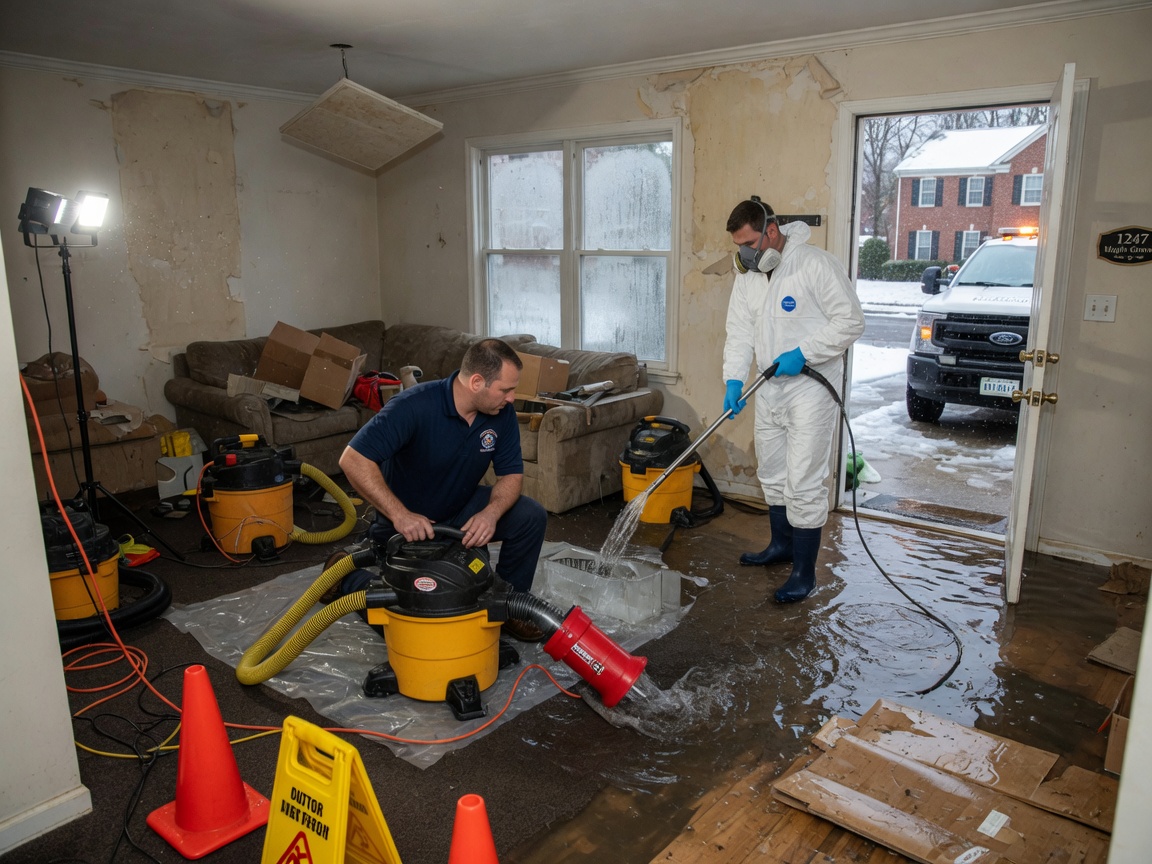
Emergency Water Extraction
Standing water removed fast, with the source classified before a single machine is placed.
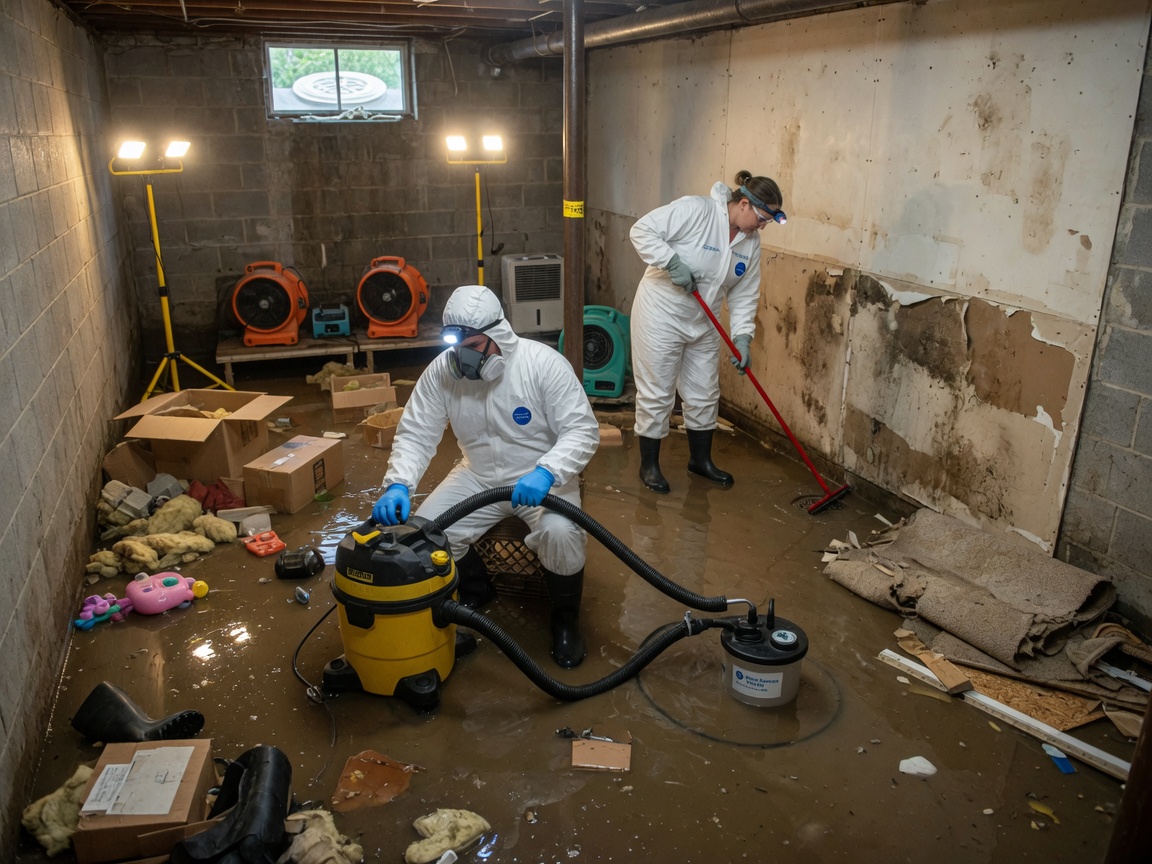
Flooded Basement Cleanup
Finished and unfinished basement flooding, from sump failure to hydrostatic seepage through the slab edge.
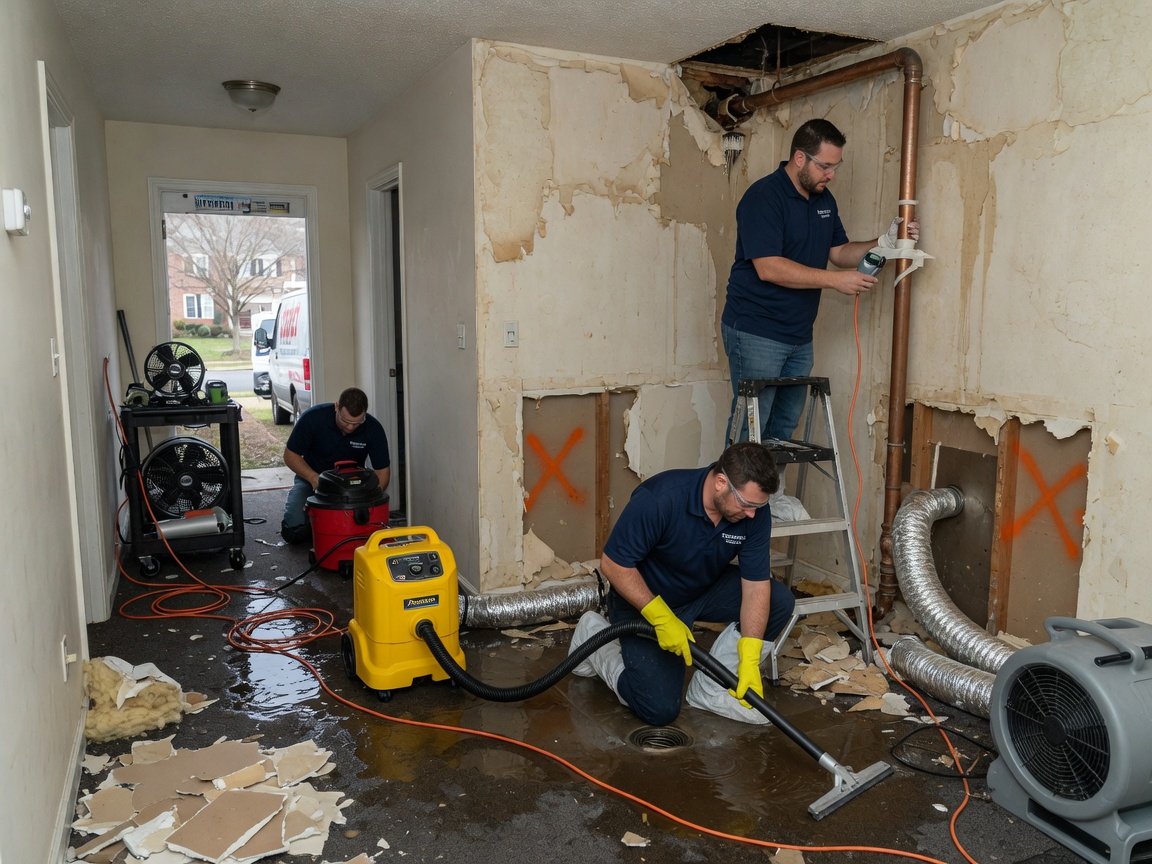
Burst Pipe Water Damage Cleanup
Supply line failures release water at full pressure, and the volume is set by how long it ran before anyone noticed.
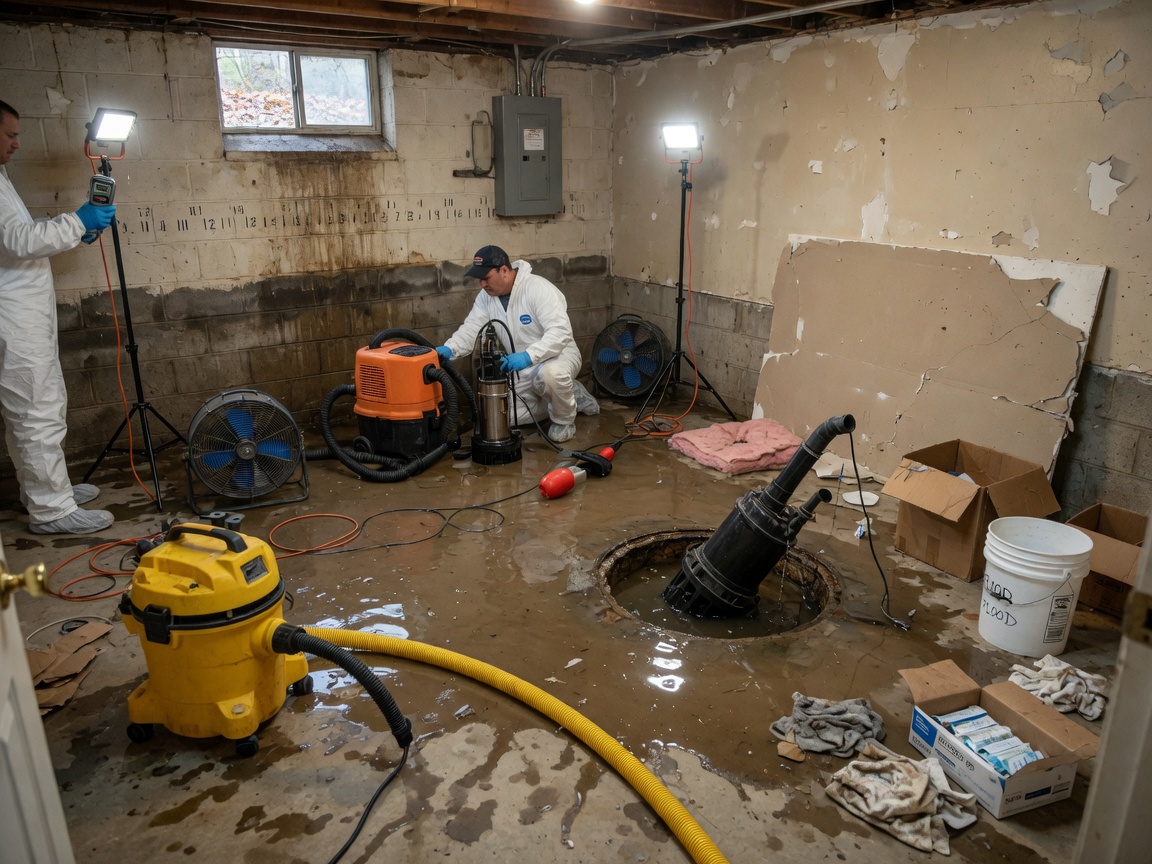
Sump Pump Failure Cleanup
The single most common cause of basement flooding in Fairfax County, and it almost always happens during a storm.
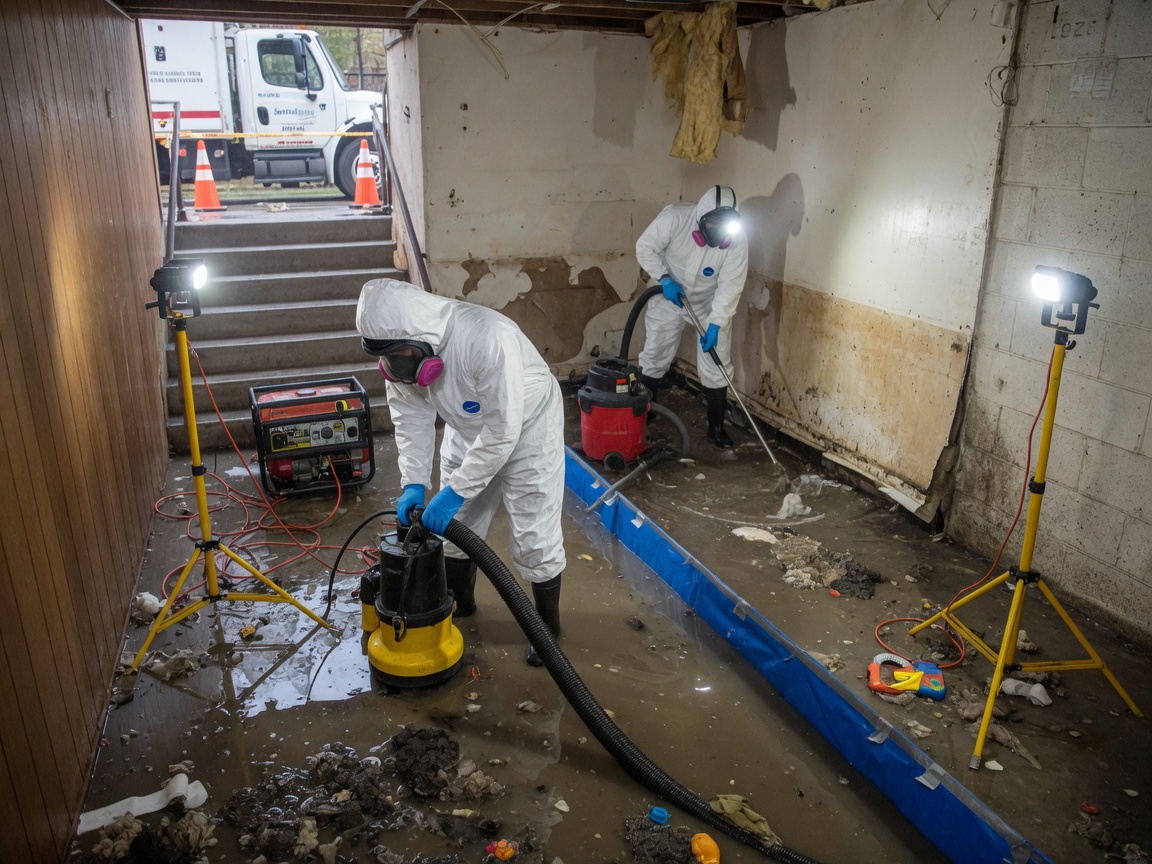
Sewage Backup Cleanup Sanitation
Category 3 water, which means containment, full removal of porous material and verified sanitation.
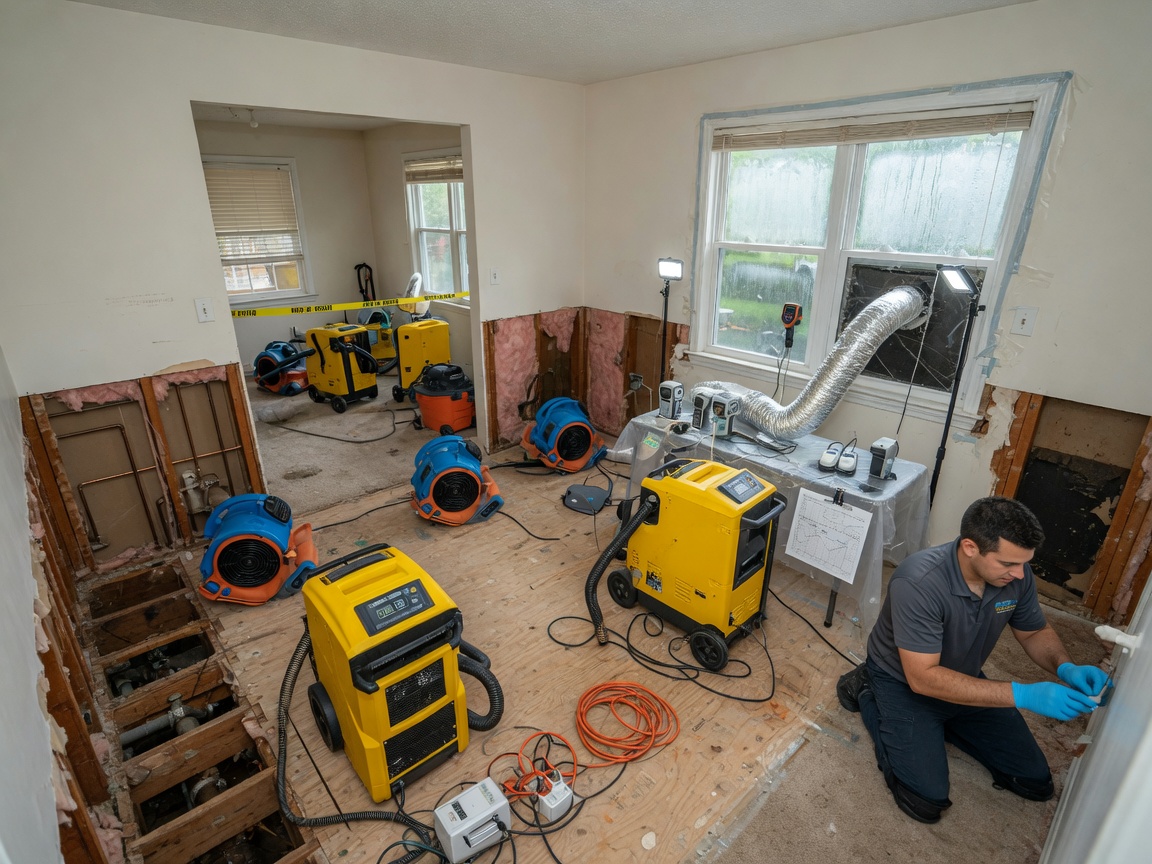
Structural Drying Dehumidification
Equipment sized by IICRC S500 to the class of loss, with daily readings against a measured dry standard.
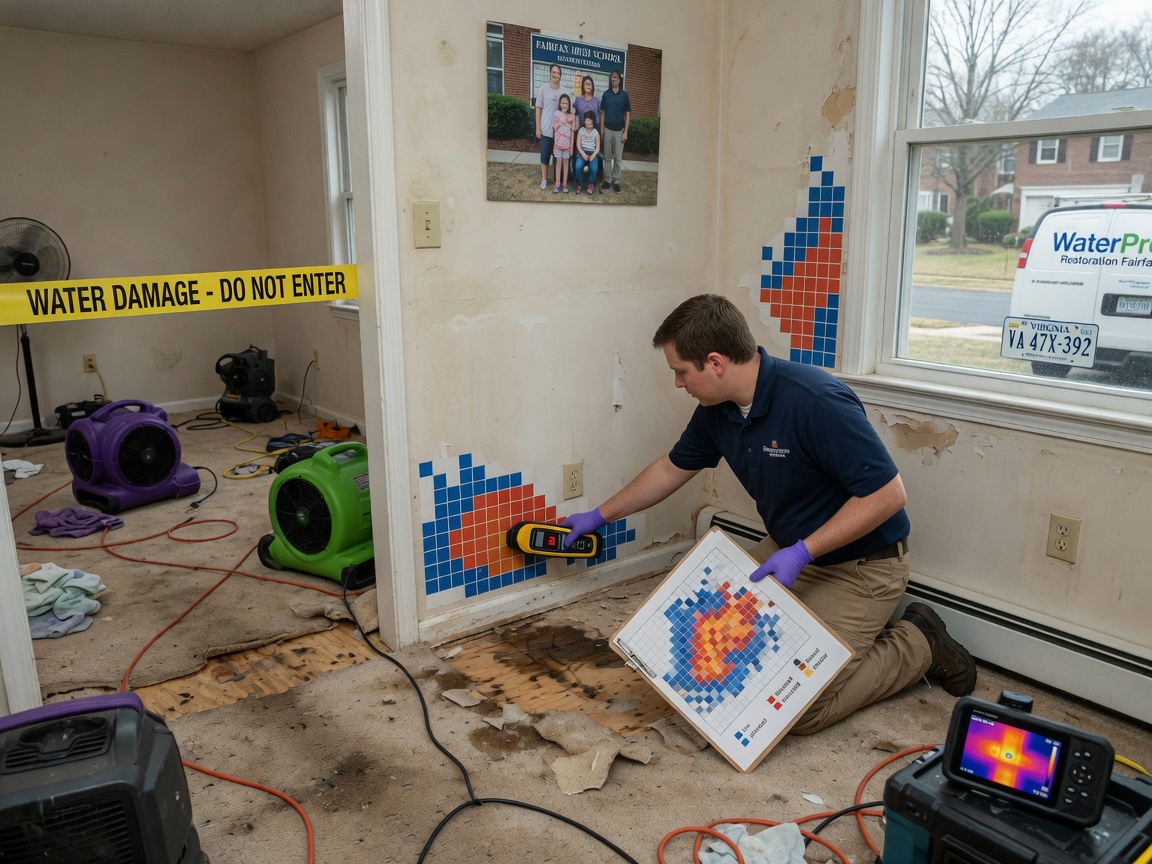
Moisture Mapping
Thermal imaging plus meter verification to find the actual edge of the water, which is rarely where the stain stops.
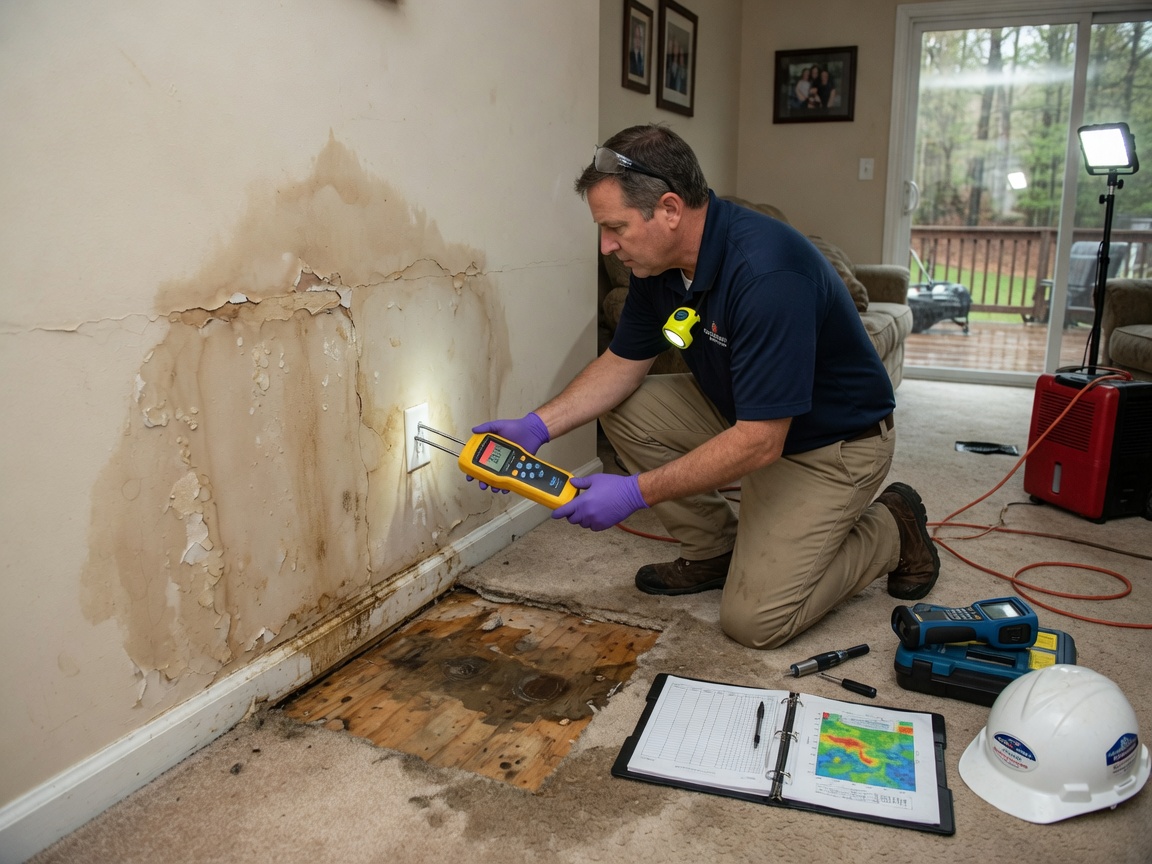
Water Damage Inspection
A documented assessment with readings and a written scope before anyone tears anything out.
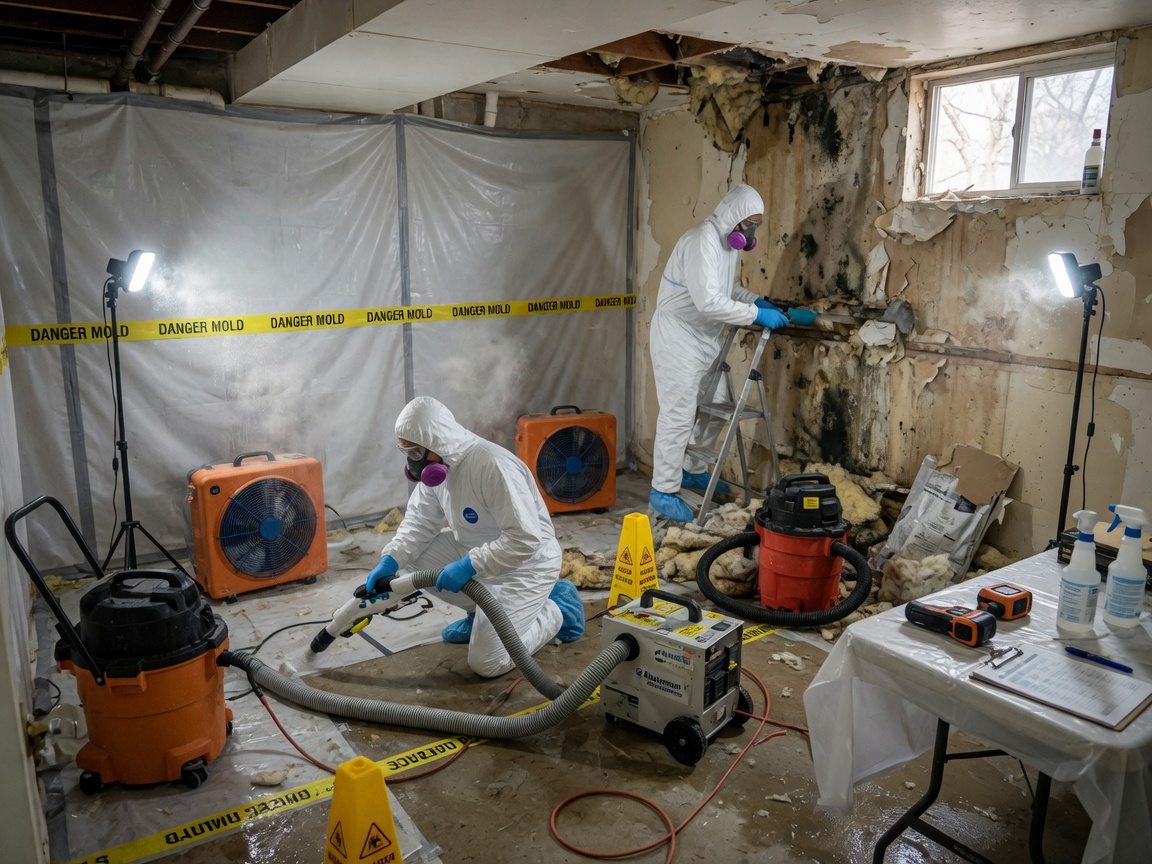
Mold Remediation Services
Containment, HEPA filtration, removal and verified clearance under IICRC S520, addressing the moisture source first.
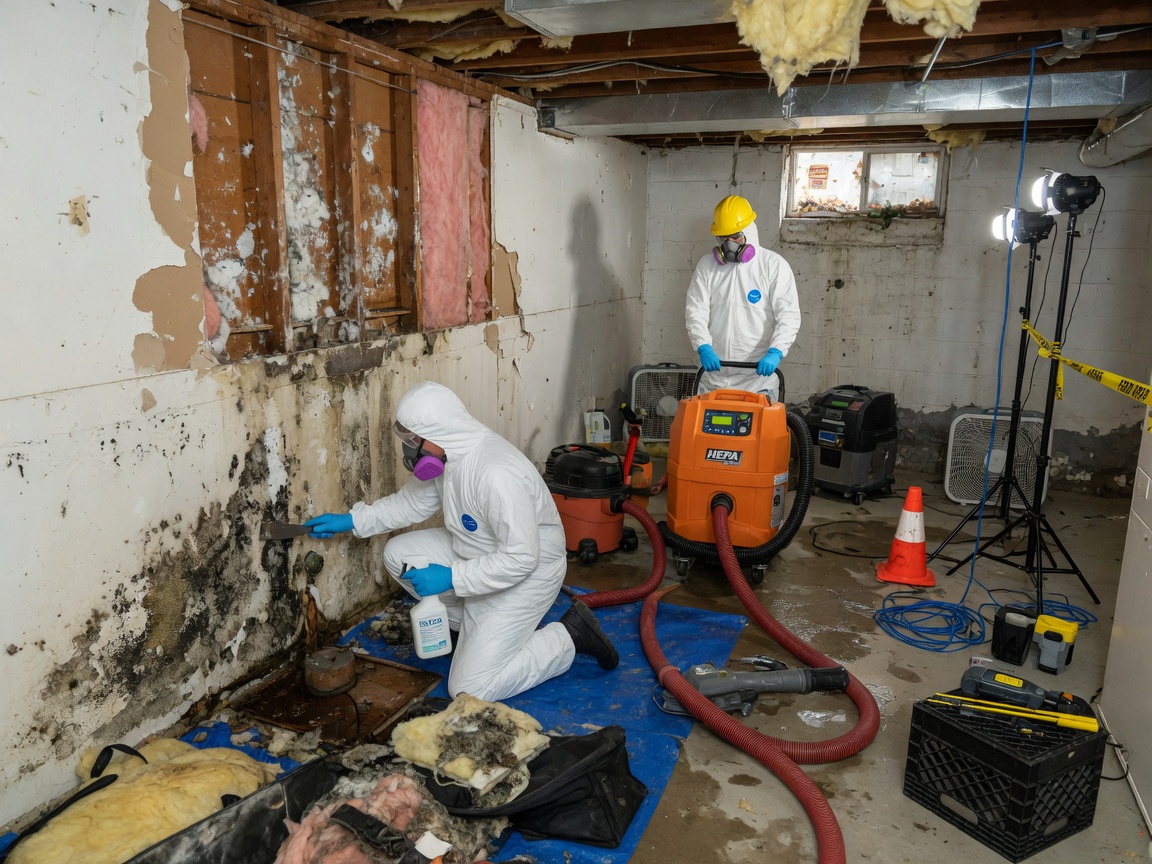
Basement Mold Cleanup
Below grade mold is a humidity problem as often as a leak, and treating it as a leak is why it comes back.
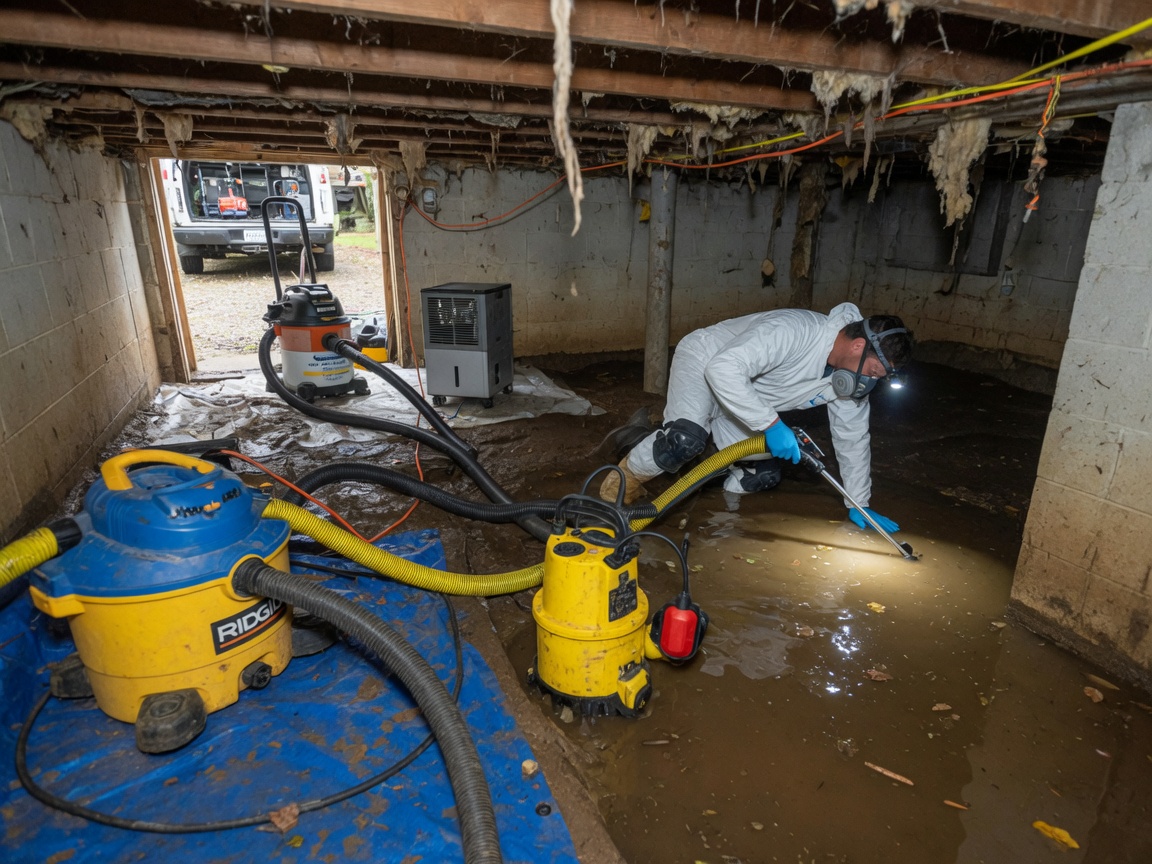
Crawlspace Water Extraction
Standing water under the house, saturated insulation and a vapour barrier holding it all in place.
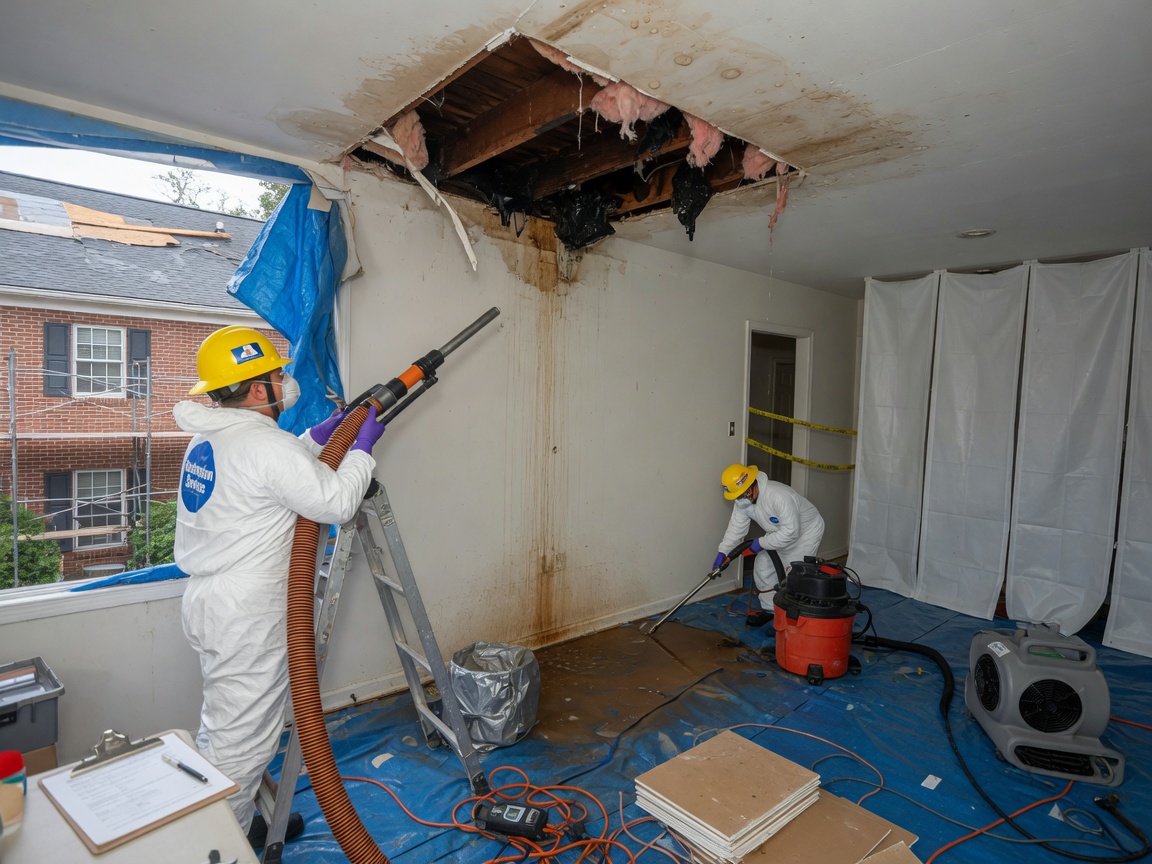
Roof Leak Repair Water Damage Mitigation
Stopping the intrusion, then drying the attic and ceiling assembly the water travelled through.
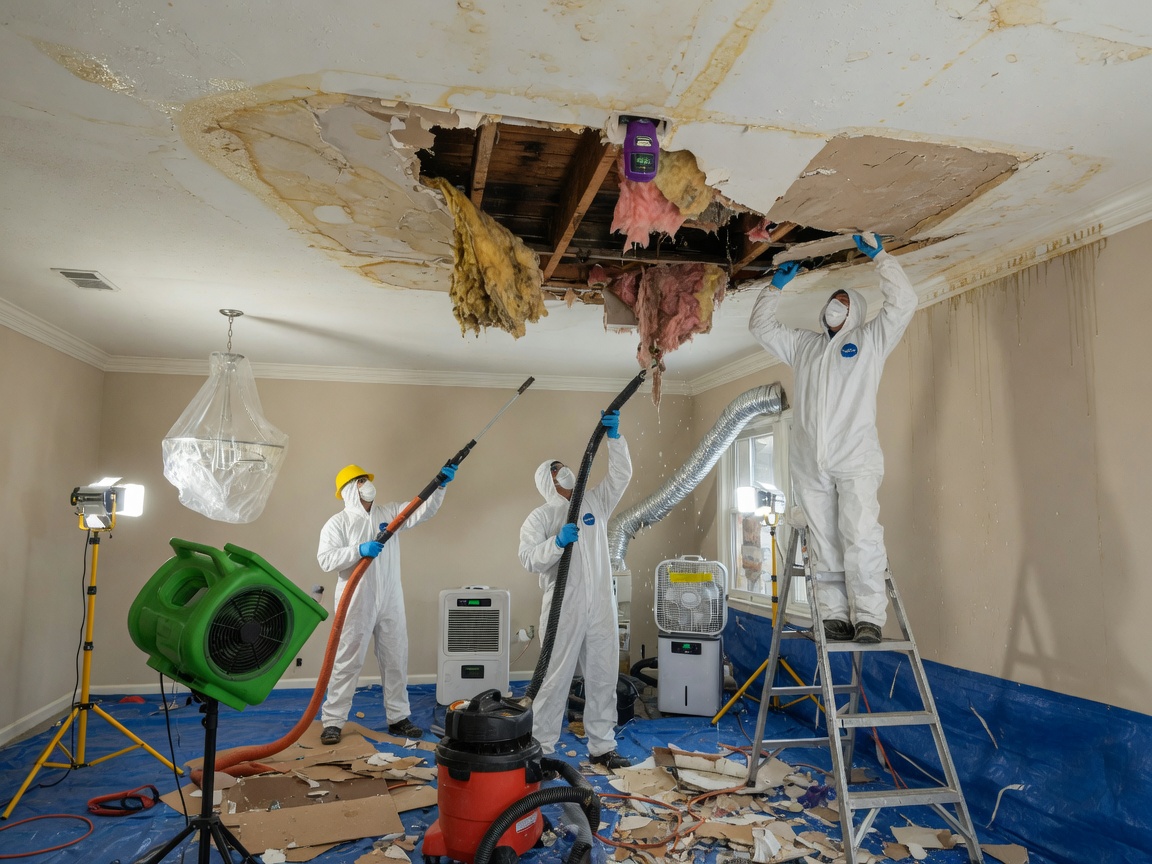
Ceiling Water Damage Restoration
Water crossing a floor assembly, with the source traced before the ceiling is repaired.
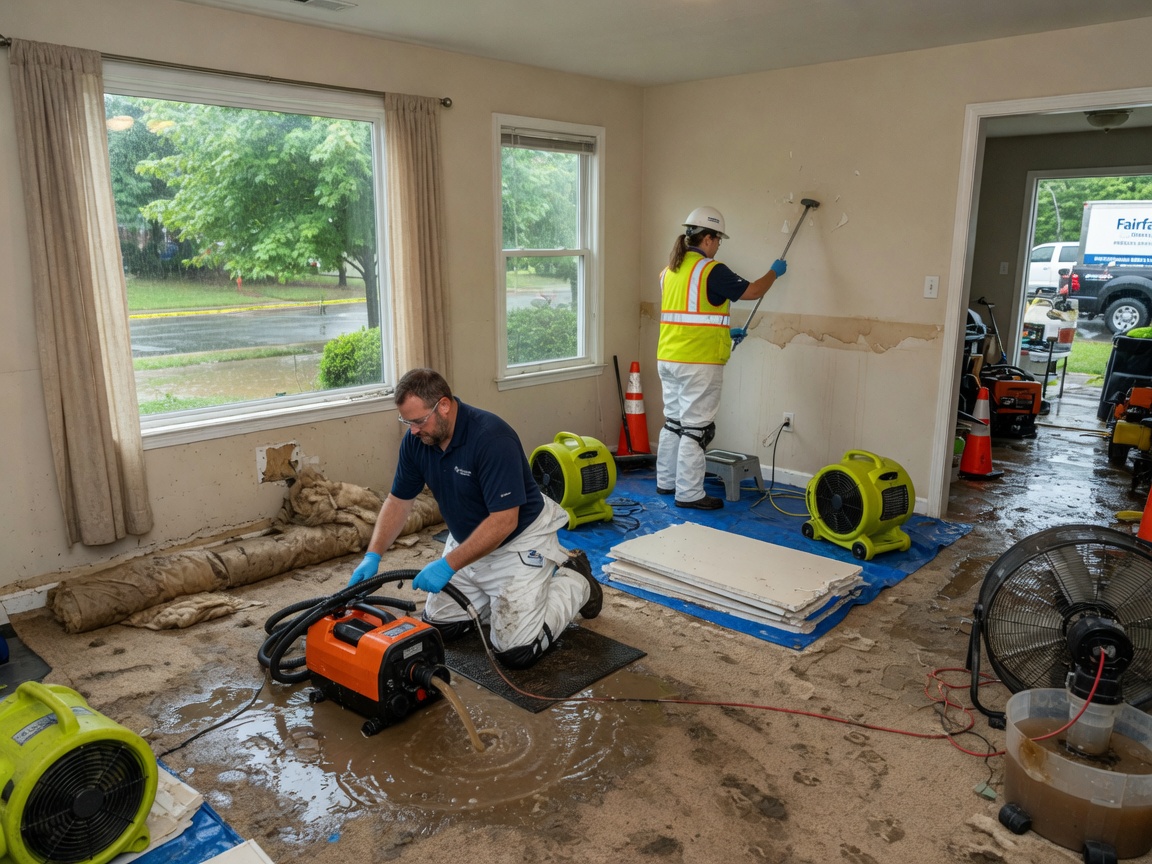
Flood Damage Cleanup
Storm and groundwater intrusion, which is Category 3 from the moment it enters and is handled accordingly.
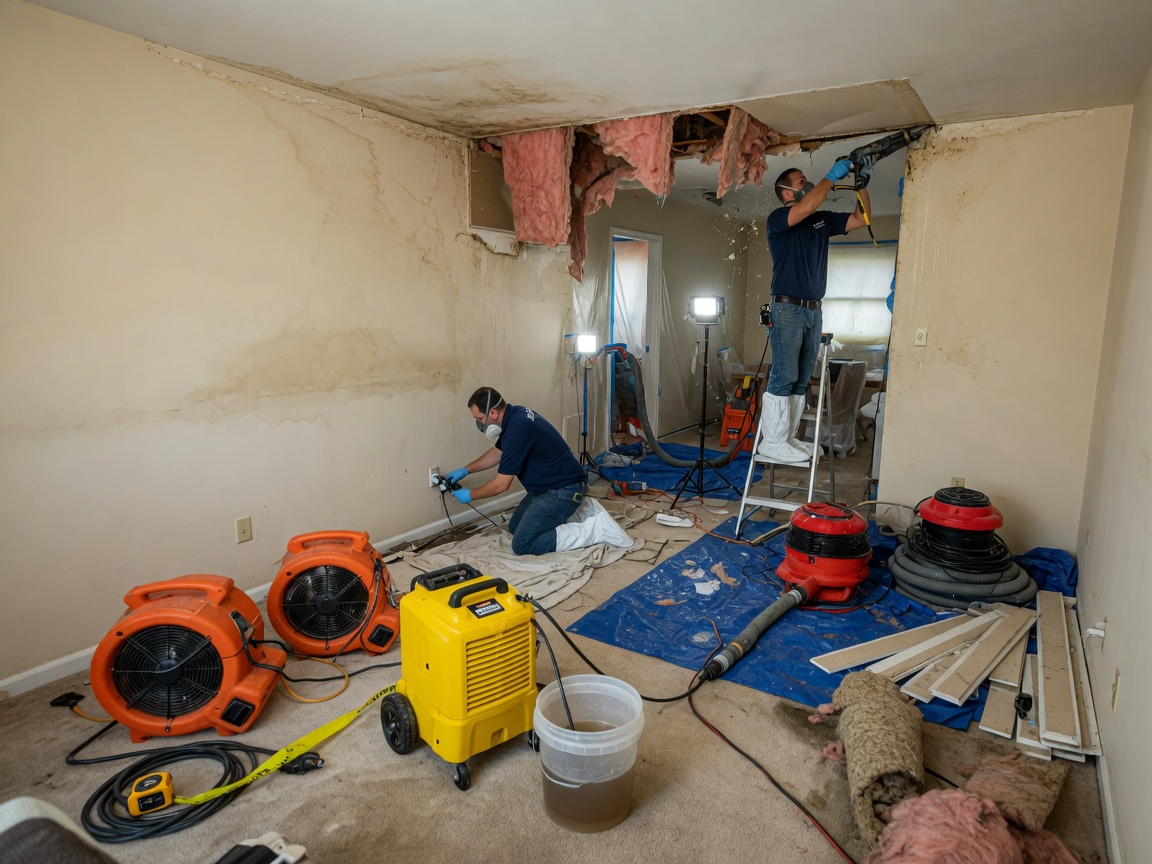
Commercial Water Damage Repair
Multi tenant coordination, after hours scheduling and documentation that a commercial adjuster can work from.
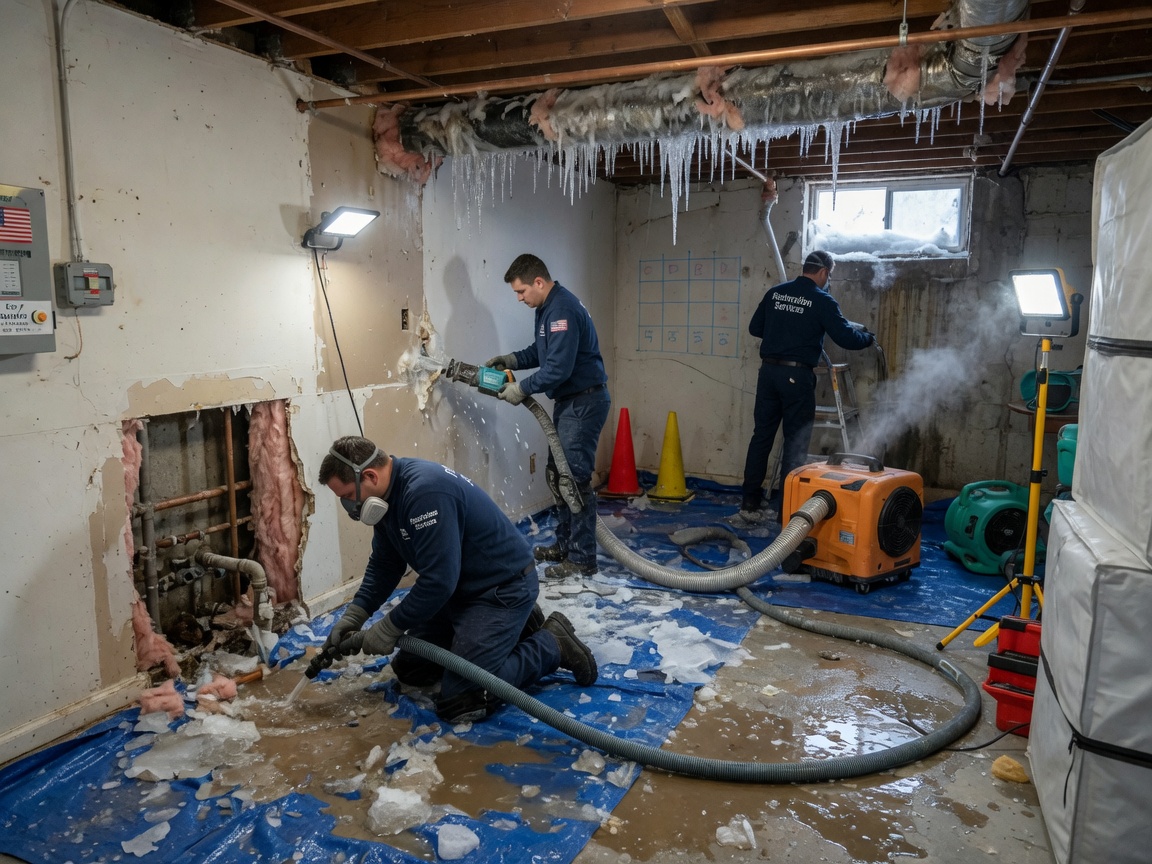
Frozen Pipe Burst Cleanup
Northern Virginia freeze events split lines in garages, crawl spaces and exterior walls, and the water runs until someone gets home.
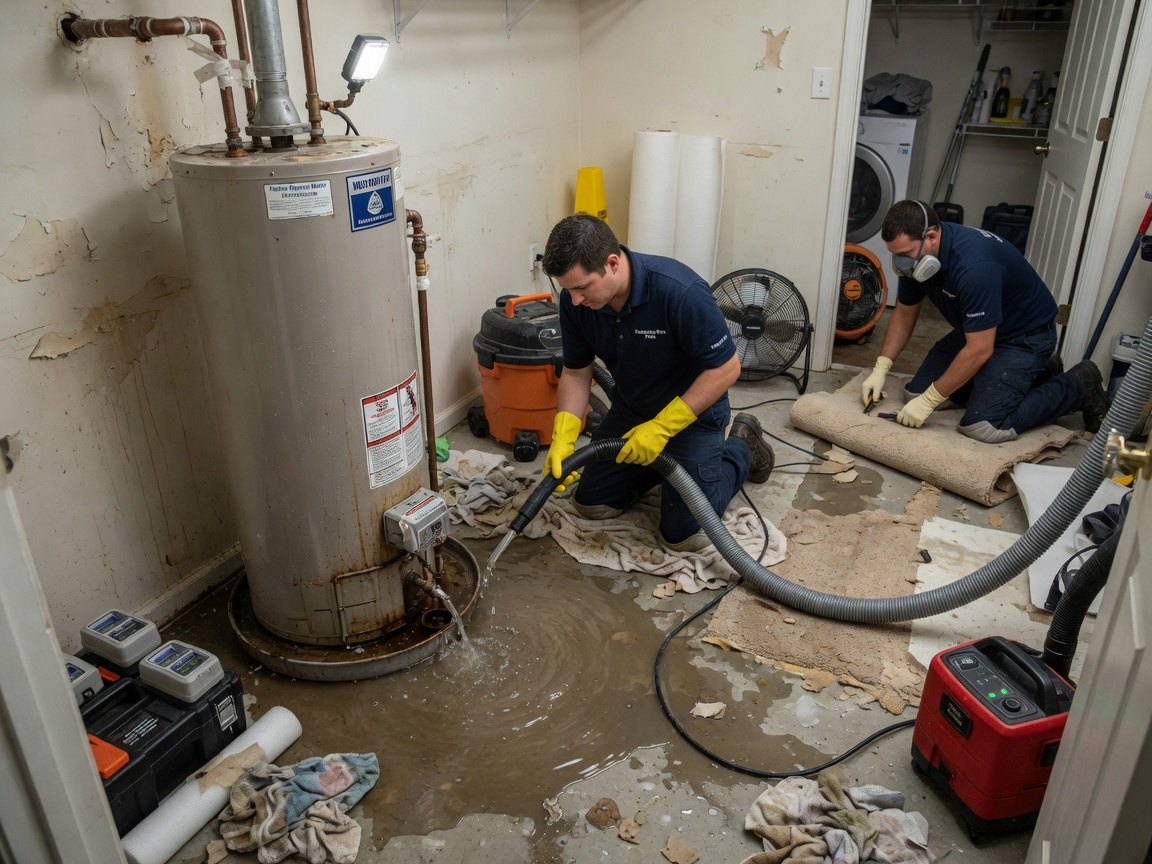
Water Heater Leak Cleanup
A tank failure releases forty to eighty gallons at once, usually into a closet or basement nobody checks daily.
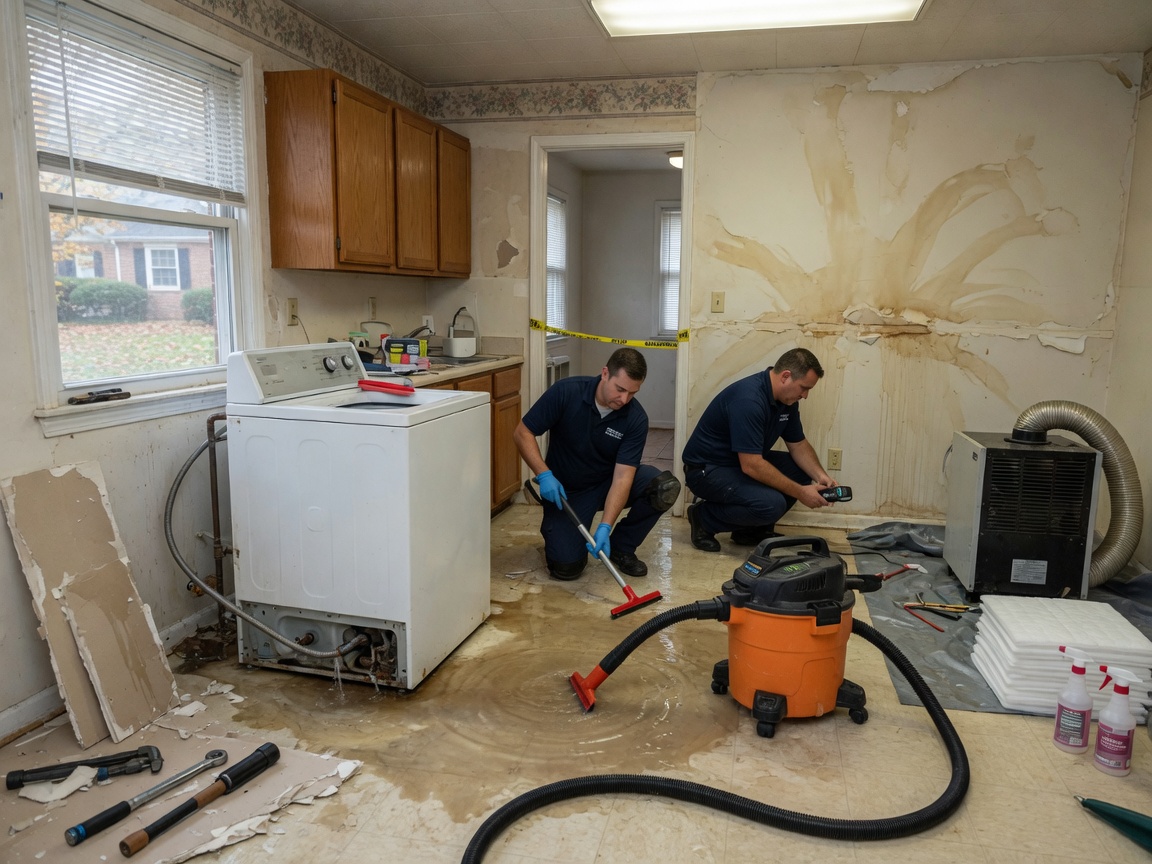
Appliance Leak Cleanup
Washing machines, dishwashers, refrigerator lines and disposals, which supply water at full pressure to places nobody inspects.
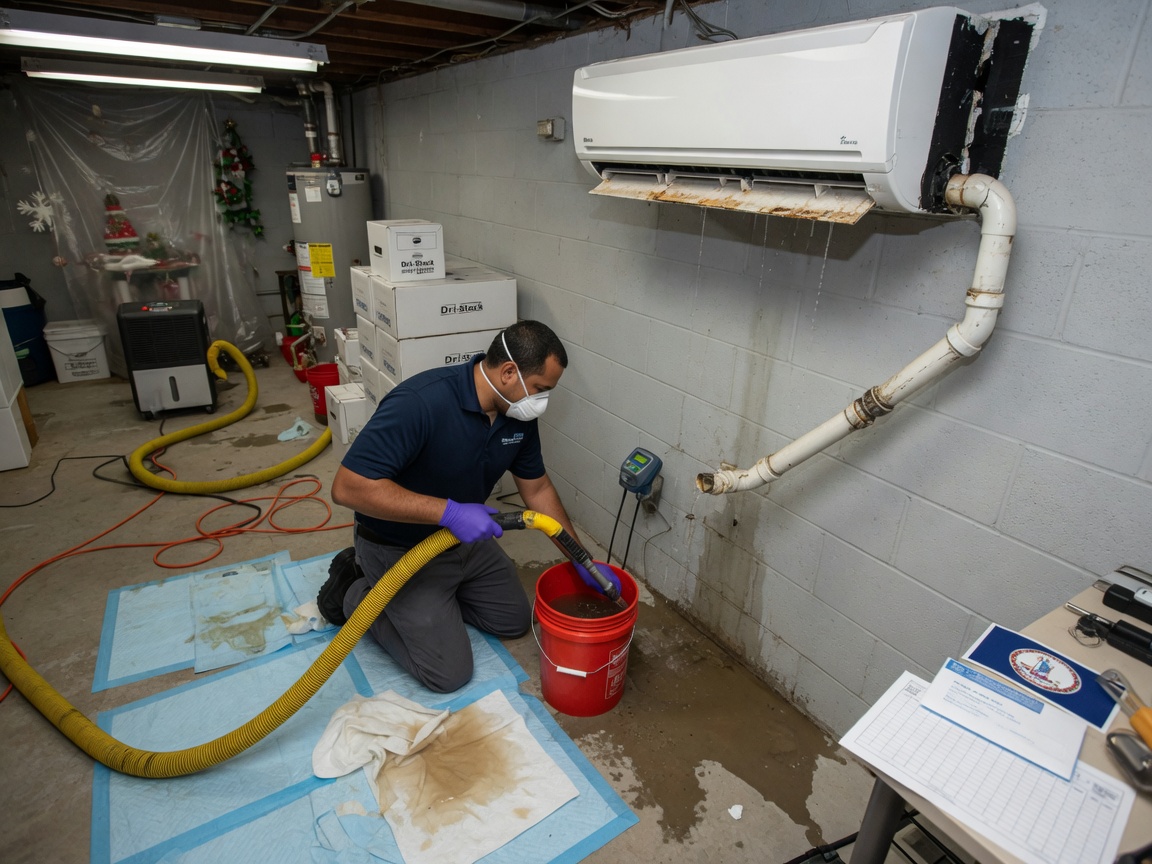
AC Condensate Leak Cleanup
Blocked condensate drains overflow into the utility closet, the ceiling below or the wall behind the air handler.
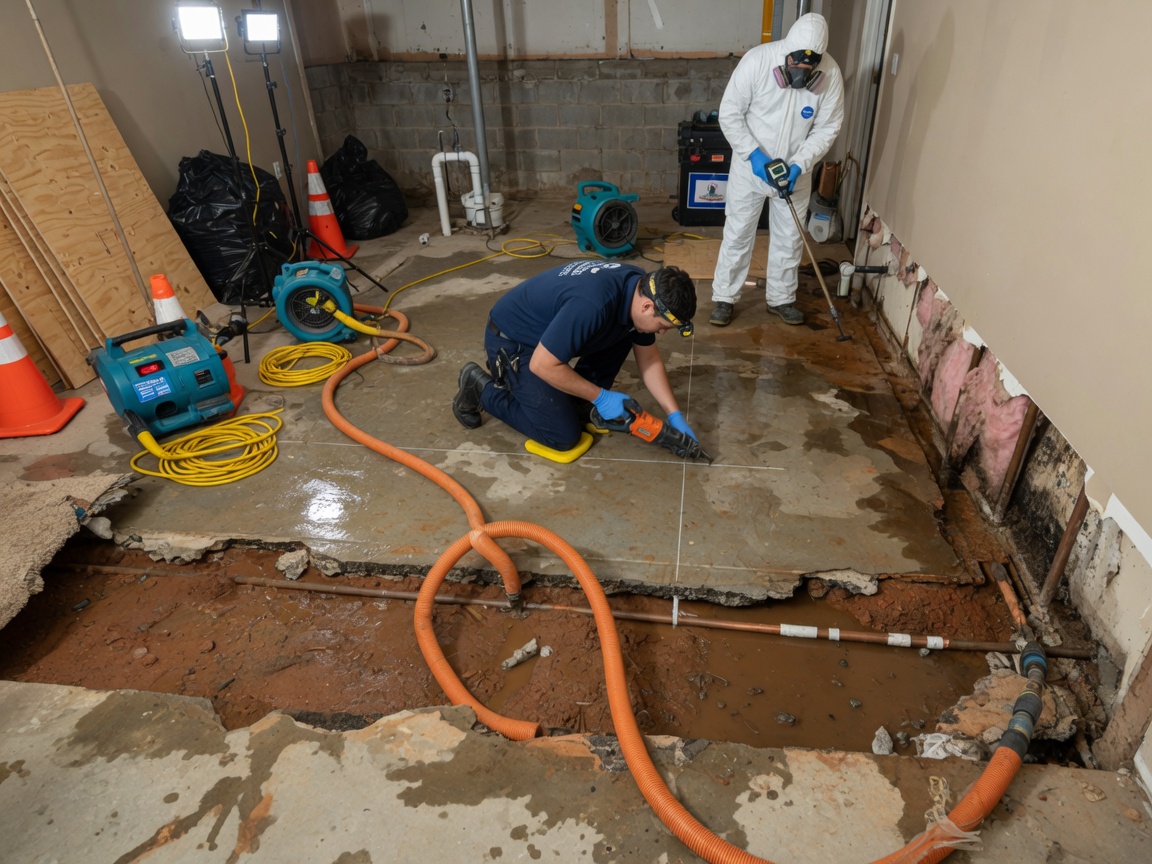
Slab Leak Water Damage Repair
Supply lines under a concrete slab, where the first sign is warm flooring, an unexplained bill or damp carpet at an edge.
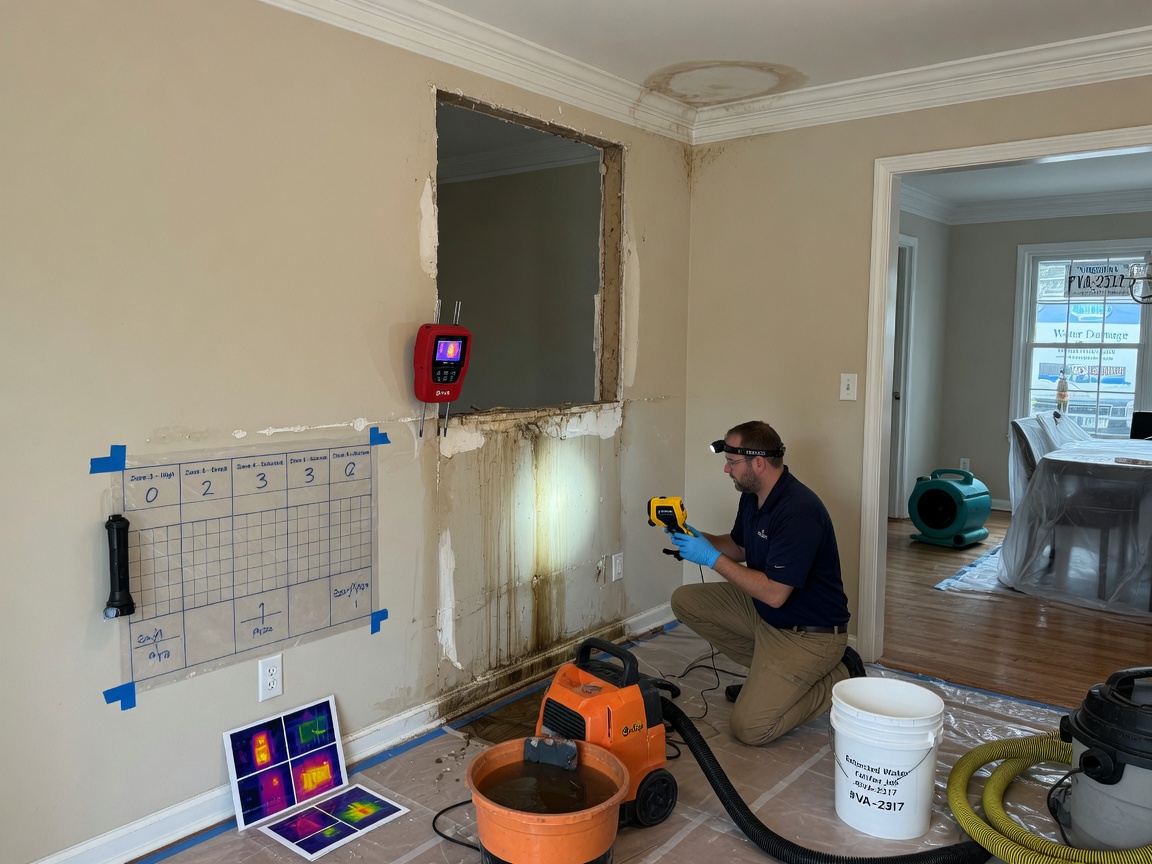
Leak Detection Services
Finding water intrusion without opening walls at random, using acoustic, thermal and pressure methods.
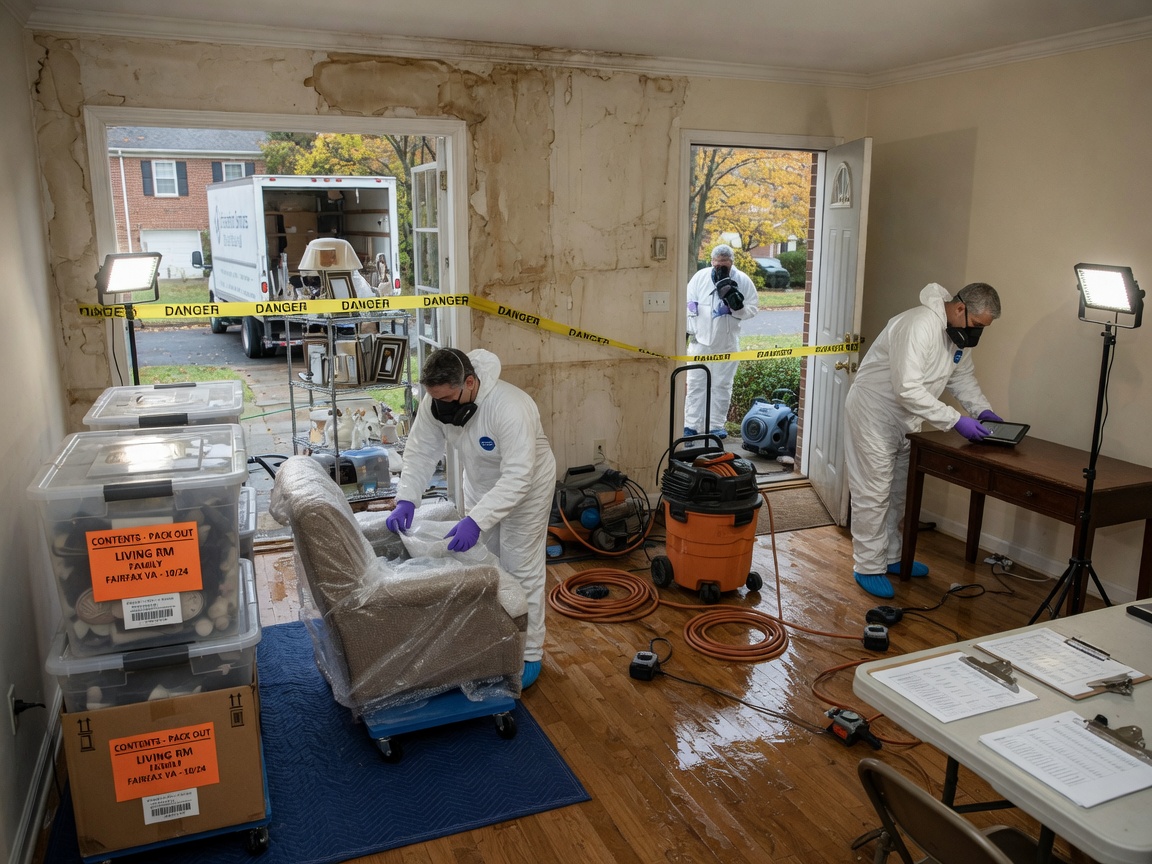
Content Pack Out Services
Inventory, pack out, off site cleaning and storage of contents, with documentation your adjuster can work from.
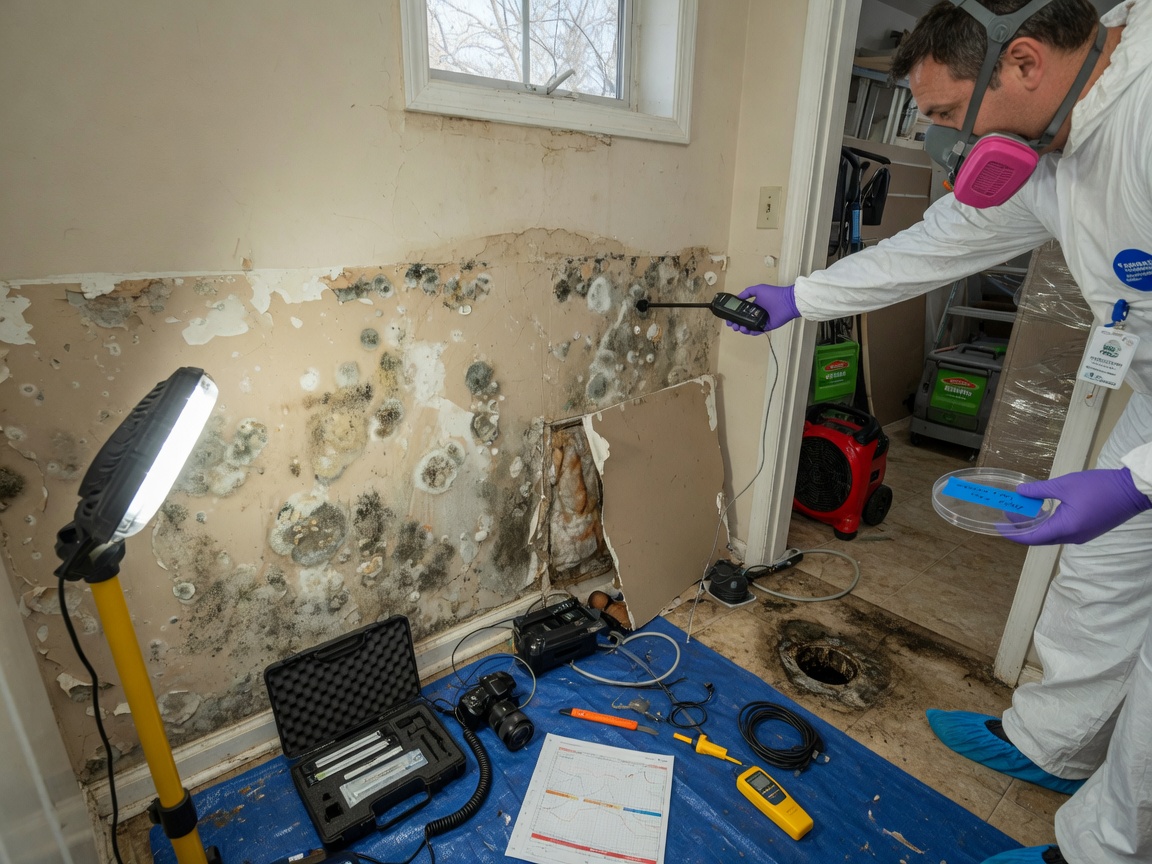
Mold Inspection Testing
Air and surface sampling with lab analysis, used where visible inspection cannot answer the question.
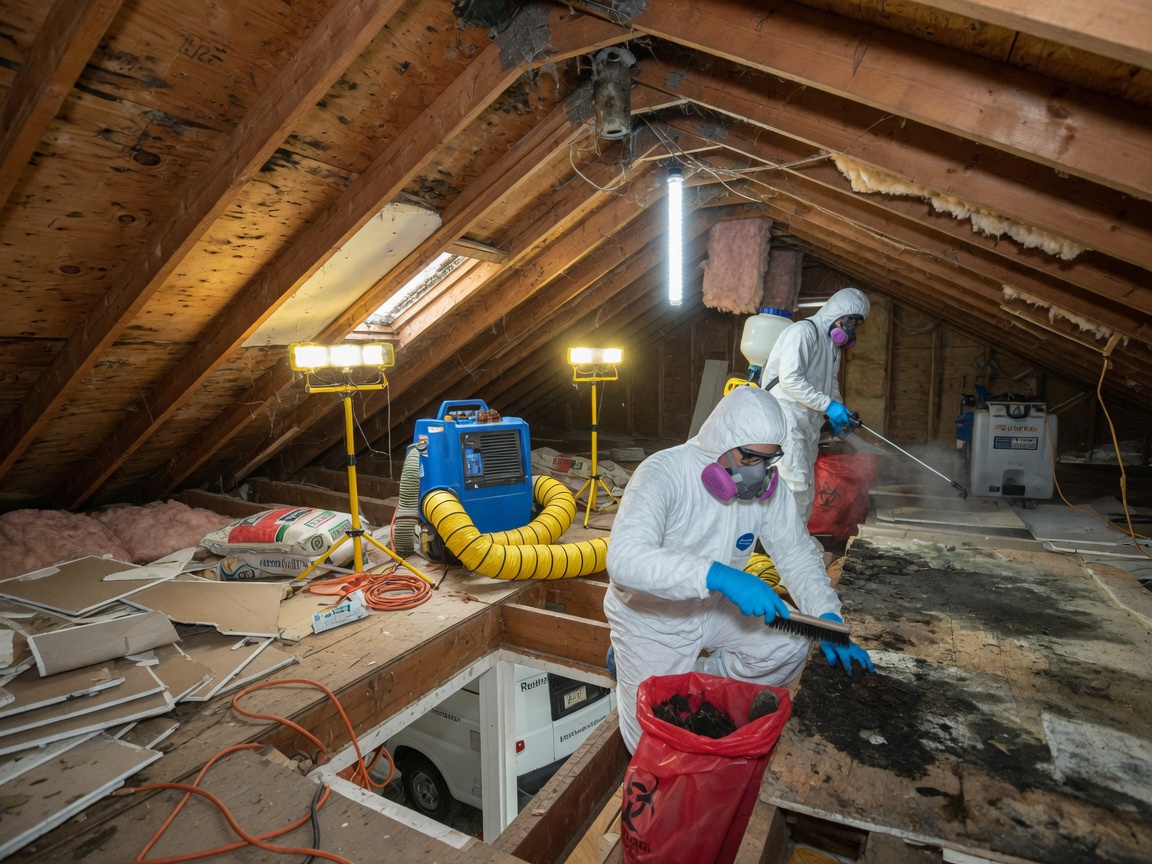
Attic Mold Removal
Attic mold in Fairfax County is nearly always a ventilation and air sealing failure, not a roof leak.
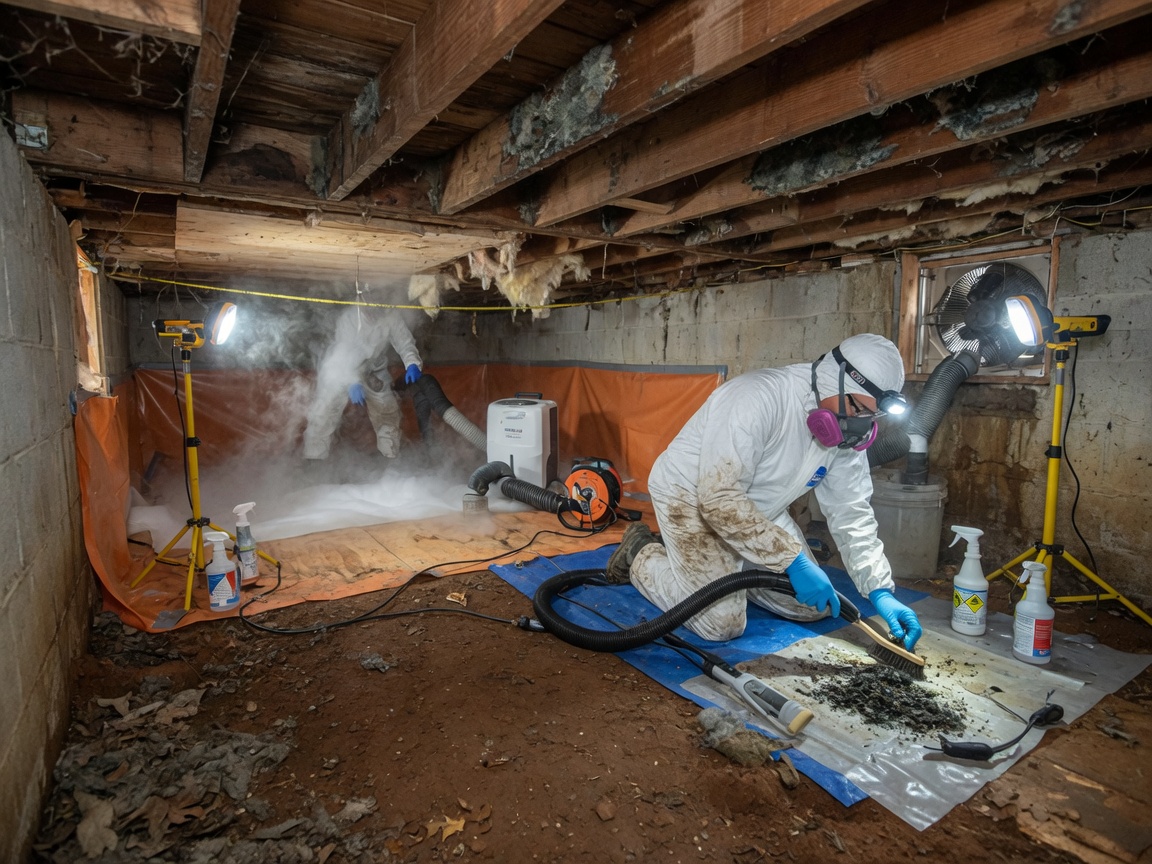
Crawlspace Mold Remediation
Crawl space mold is a different problem from above grade mold, and the standard fixes do not work down there.
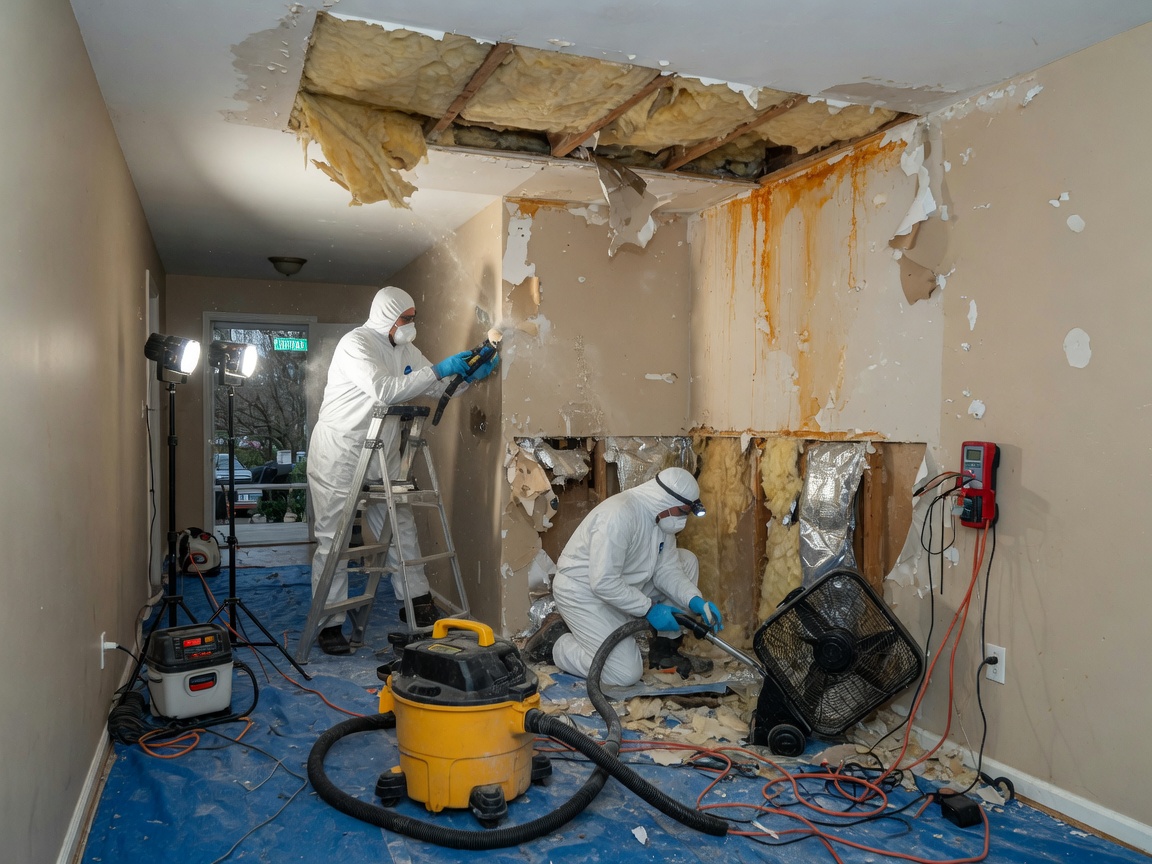
Drywall Water Damage Repair
Flood cuts, cavity drying and reinstatement with a texture match, so the repair is not visible afterwards.
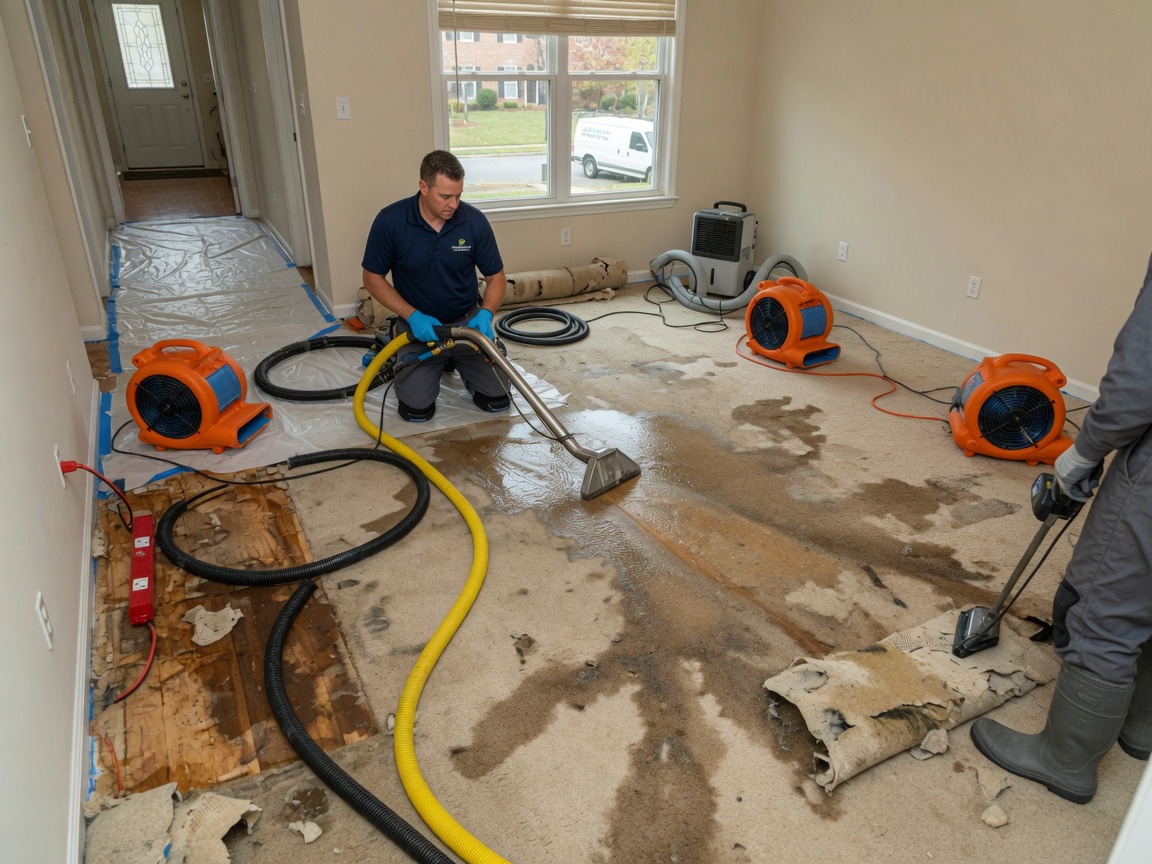
Carpet Water Damage Restoration
Wet carpets can often be saved on clean water. The pad almost never is, and the difference matters.
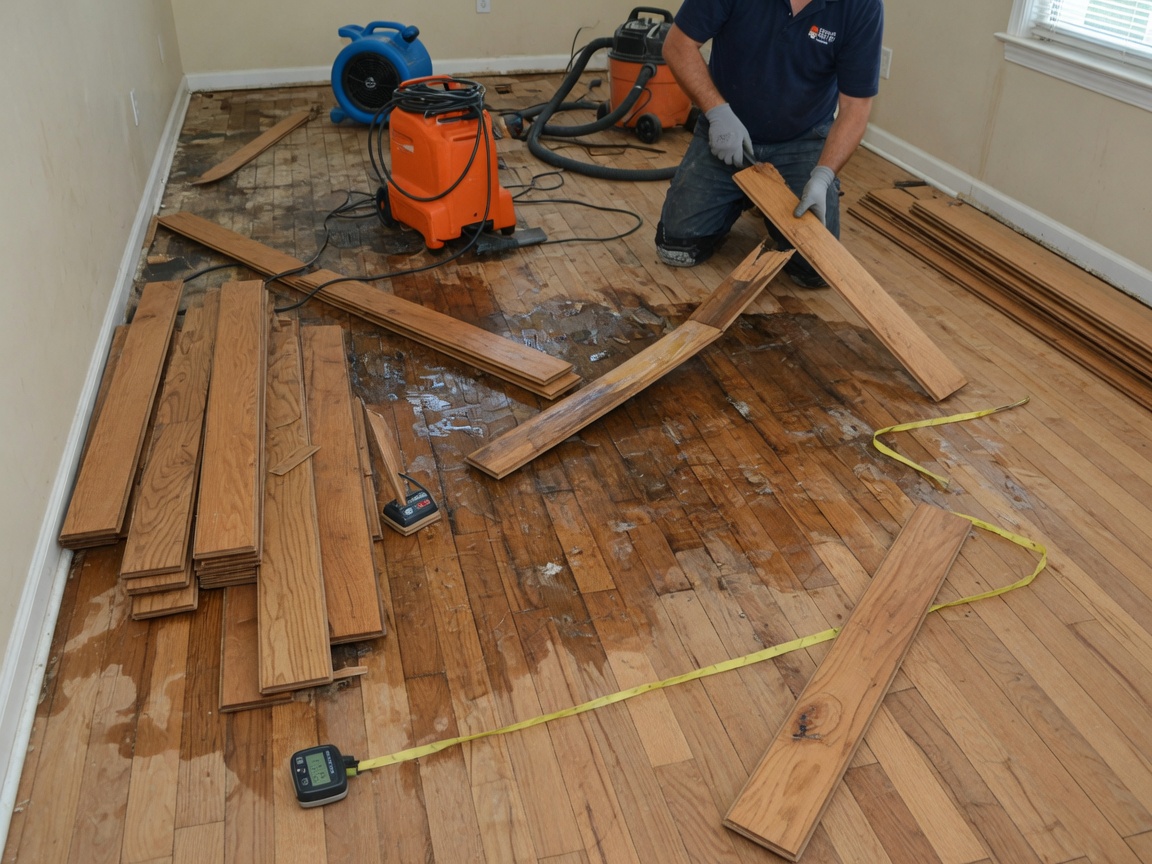
Hardwood Floor Water Damage Repair
There is a short window before cupping becomes permanent, and specialised floor drying is what fits inside it.
How it works
From your first call to a verified dry structure
Call and stop the source
Call (571) 727-5354. Before a truck arrives we walk you through shutting off the supply at the main or the fixture, and through the electrical safety question, which matters more than most people expect when water is near outlets or a panel.
Inspect, classify and scope
On arrival the water gets a category and the loss gets a class. Thermal imaging and moisture meters map the full extent, including cavities you cannot see. You get a written scope before demolition or equipment placement begins.
Extract and remove
Truck mounted or portable extraction depending on access and volume. Carpet pad comes out, always. Category 3 losses lose porous materials entirely, because contaminated drywall and insulation cannot be cleaned back to a safe condition.
Dry and monitor
Air movers and dehumidification sized to the class of loss, with containment where it helps concentrate the drying. Readings are taken and logged every day, and equipment moves as the wet areas shrink.
Verify, then repair
Final readings confirm the structure is dry against a dry standard taken elsewhere in the building. Only then does drywall, flooring and trim go back. Rebuilding over a wet cavity is how mold jobs are created.