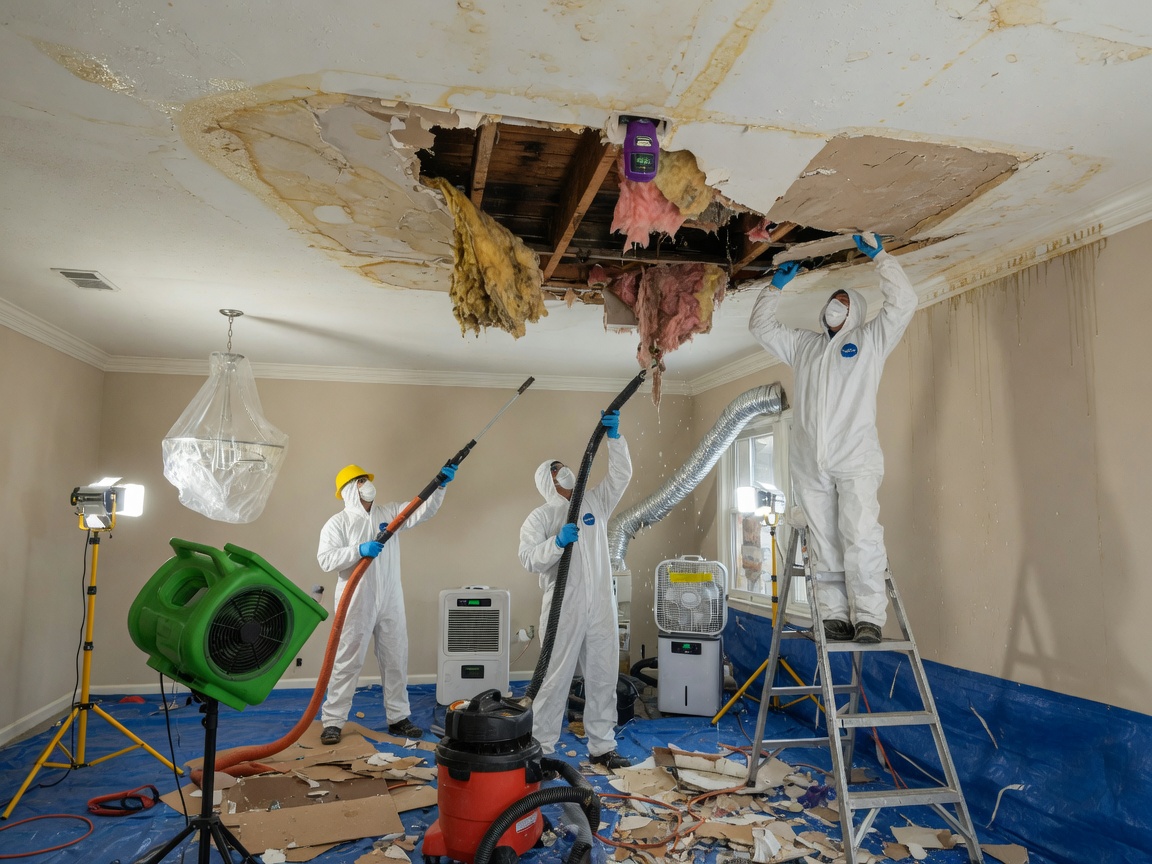
A wet ceiling is always a symptom of something on the level above, and repairing the ceiling before identifying that something is how the same repair gets done twice. The three sources are plumbing in the floor above, roof or attic intrusion when the ceiling is on the top level, and HVAC condensate from an air handler or a condensate line running through the joist bay.
Water sits on top of the ceiling drywall inside the joist cavity, and the drywall acts as a tray until it cannot. That is why the sequence is often a stain, then a bulge, then a sudden failure. A bulging ceiling holding water is a safety issue, and the right action is to relieve it deliberately at the low point with a container underneath rather than let it drop.
The cavity above the ceiling is the part that actually has to dry. Insulation between joists holds water, joists and subfloor hold water, and the top of the drywall stays wet even when the painted face beneath reads dry. Drying that cavity means either working through small openings from below, or lifting flooring above, and the choice depends on the extent and on which finish is easier to restore.
Repair follows verification. Drywall goes back once the cavity reads within range of a dry standard, then taping, texture matching and paint. On older Vienna and Falls Church homes with plaster rather than drywall, the assessment is different, because plaster on lath dries slowly but often survives events that would destroy drywall.
Technician insight
On a top floor ceiling, check the bathroom exhaust duct before blaming the roof. A duct that terminates in the attic instead of through the roof dumps warm moist air into a cold space every shower, and the condensation that produces looks exactly like a roof leak, including seasonal timing. It is a surprisingly common defect in this housing stock.
Ceiling Water Damage Restoration Services We Offer
✓Upstairs Bathroom Leak Damage
The most common cause, from failed supply lines, shower pan leaks and toilet seals.
✓HVAC Condensate Ceiling Damage
Blocked condensate lines and drain pans overflowing into the joist bay below.
✓Top Floor Roof Intrusion
Ceiling damage from roof and flashing failures, handled alongside attic drying.
✓Plaster Ceiling Assessment
Older homes with plaster on lath, where the salvage decision differs from drywall.
How it works
- 1
Trace
Source identified on the level above and stopped.
- 2
Make safe
Any bulging section relieved deliberately, area cleared beneath.
- 3
Open and dry
Wet insulation removed, cavity dried and monitored to a dry standard.
- 4
Restore
Drywall, tape, texture match and paint once readings clear.