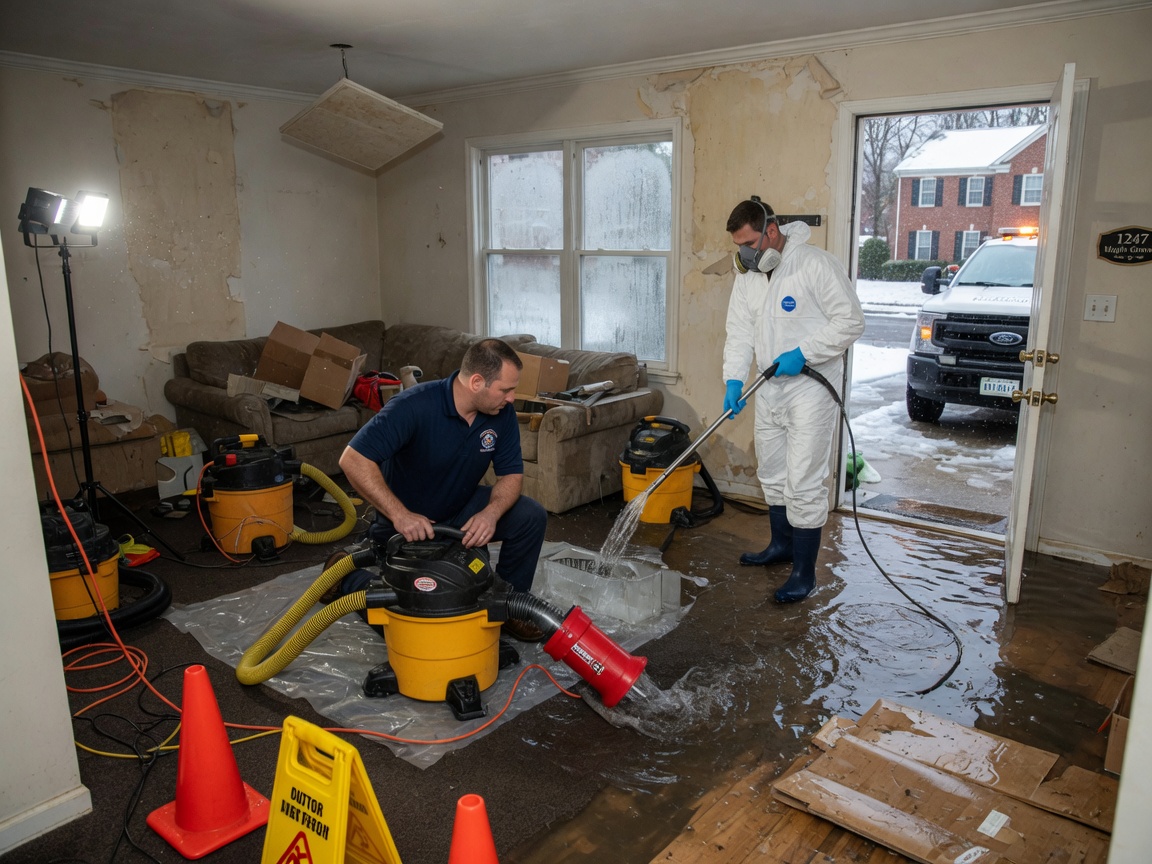
Extraction is the highest leverage hour of any water loss. Every gallon pulled out mechanically is a gallon that does not have to be evaporated later, and evaporation is the slow expensive part. A truck mounted unit moves water at a rate no dehumidifier can approach, which is why the sequence is always extract first, then dry the structure properly.
Before extraction starts the water gets a category. Clean supply water from a burst supply line is Category 1 and most materials can be saved. Water that has picked up contamination, from a washing machine discharge line or a dishwasher, or clean water that has sat for a day or two, is Category 2. Anything that came up through a drain, as in a sewage backup, or in from the ground is Category 3 and the rules change completely. Getting this wrong at the start means either throwing away material that could have been dried, or drying material that should have been removed.
Carpet pad comes out on almost every job. Pad is an open cell sponge, it holds many times its weight in water, and drying it in place under carpet is unreliable even when it technically works. The carpet itself can often be saved on a Category 1 loss with weighted extraction and floated drying, which is covered in more detail on our carpet water damage page. On Category 3 both go.
Access shapes the method. A finished basement in Burke with a walkout gets a truck mounted line straight in. A third floor condo in Tysons with a single elevator gets portable extractors and a lot more trips. We plan the route before the hose comes off the truck, because the difference in extraction time is measured in hours.
Extraction is only the first phase. Once the standing water is gone, moisture mapping establishes where the water actually travelled, and that map sets the drying scope. If you want to understand what happens over the days that follow, our guide on how long structural drying takes walks through it.
Technician insight
The most common mistake we correct on a second opinion call is extraction that stopped too early. If a weighted head still lifts water on the fourth pass over the same square metre, the assembly is not extracted yet, and every gallon left behind adds a day of drying.
Emergency Water Extraction Services We Offer
✓Standing Water Removal
Submersible pumping for depths above roughly two inches, then extraction for the remainder.
✓Weighted Carpet Extraction
Multiple passes with a weighted extraction head, which pulls far more water than a wand alone.
✓Sub-surface Extraction
Extraction through the carpet into the pad and slab where the assembly is being floated rather than removed.
✓Contents Relocation
Moving furniture off wet flooring and blocking or foil tabbing legs to prevent stain transfer.
How it works
- 1
Source control
The supply gets shut off at the fixture or the main. Extraction into an active leak is wasted work.
- 2
Category call
The water is classified, which determines what is extracted and dried versus what is removed.
- 3
Bulk removal
Pumping for depth, then extraction passes until the surface stops yielding water.
- 4
Handoff to drying
Moisture readings taken, affected area mapped, and drying equipment sized to what is left.