2026-09-12 ·
How Long Structural Drying Takes and How to Know It Is Actually Dry
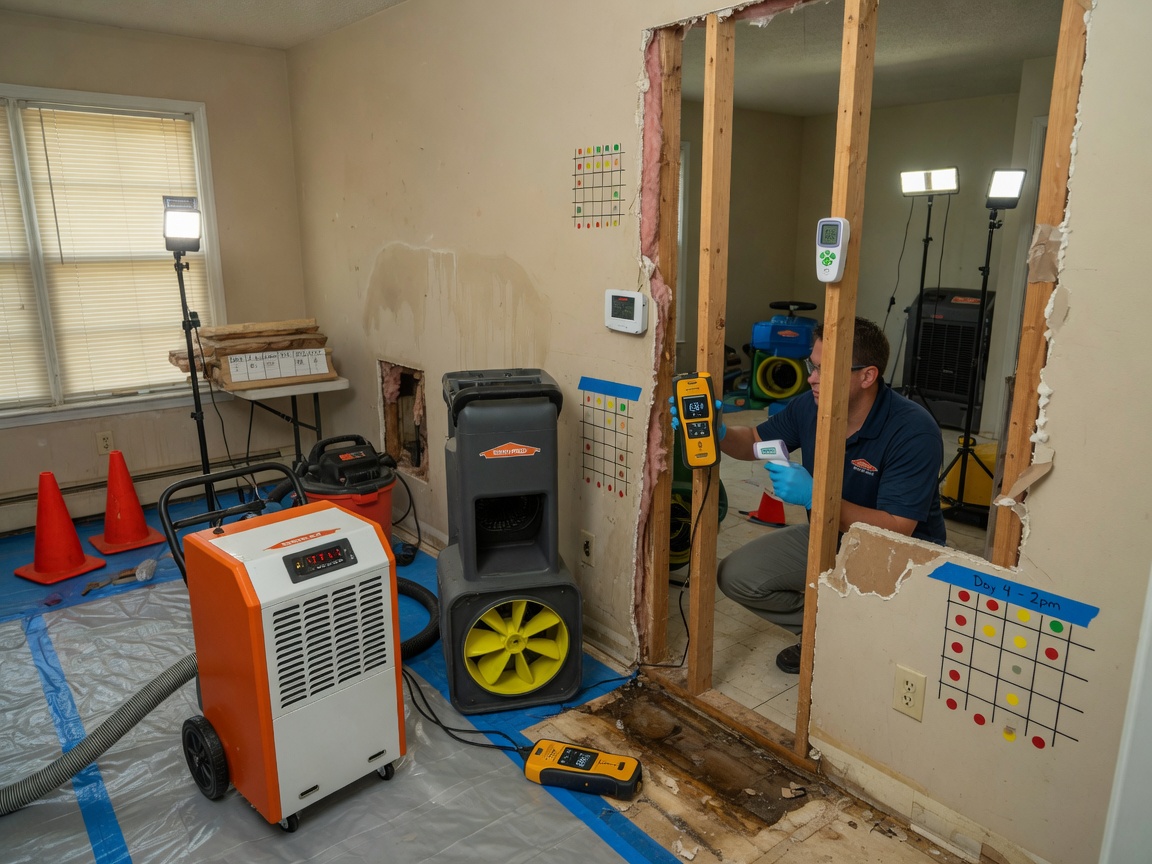
Most residential structural drying takes three to five days, and a structure is dry when the affected materials read within range of a dry standard measured on unaffected material of the same type in the same building. Both halves of that matter. The number of days is an estimate. The dry standard is the actual finish line, and any contractor who names a duration before taking readings is telling you about their schedule rather than your building.
The duration is driven by the class of loss, which is an IICRC S500 concept describing how much of the space is wet and how porous the wet material is. A Class 1 loss, where a small proportion of the space is affected and the materials are low porosity, dries fast. A Class 4 loss, involving materials that hold water tightly such as hardwood, plaster, concrete and masonry, takes considerably longer and needs specialty equipment, because dense materials release moisture at their own pace and no amount of additional airflow changes the physics. A slab leak is the extreme version of this and runs into weeks.
Dehumidifying equipment does most of the work and its ratings are widely misread. A dehumidifier rated at 130 pints per day is rated under AHAM conditions, meaning 80 degrees Fahrenheit and 60 percent relative humidity. A Fairfax basement in autumn is nowhere near that, and the same unit will pull a fraction of the rated figure. Low grain refrigerant units are designed to perform in cool and progressively drier conditions, which is why they are the standard on structural drying work and why a consumer dehumidifier from a hardware store is not a substitute.
Airflow is the other half. Air movers do not dry anything by themselves, they move the boundary layer of saturated air off wet surfaces so evaporation can continue. Placed badly they just stir the room. Placed correctly, at a low angle across wet surfaces, they keep the evaporation rate up so the dehumidifier has something to remove. Get the ratio wrong in either direction and the drying slows down.
Verification is where jobs are won and lost. Before equipment is placed, a dry standard reading should be taken from unaffected material of the same type elsewhere in the property, and gypsum, framing and subfloor each need their own baseline because their normal moisture contents differ. Readings on the affected material are then taken daily, at marked locations so the same spots are compared, and logged. When affected readings sit within range of the standard, the structure is dry and the equipment comes out. This is the same discipline that drives moisture mapping at the start of the job.
Two warning signs worth knowing. If nobody has taken a dry standard reading, there is no target and the decision to pull equipment is being made by feel. And if the equipment is removed without a final documented reading, you have no evidence the building is dry, which matters both for your peace of mind and for your claim file. Ask for the log. Any competent restoration contractor will have one and will hand it over without hesitation. Where a previous job was pulled early, an independent water damage inspection will tell you plainly, and the consequence of getting it wrong is explained in how long it takes mold to grow after water damage.