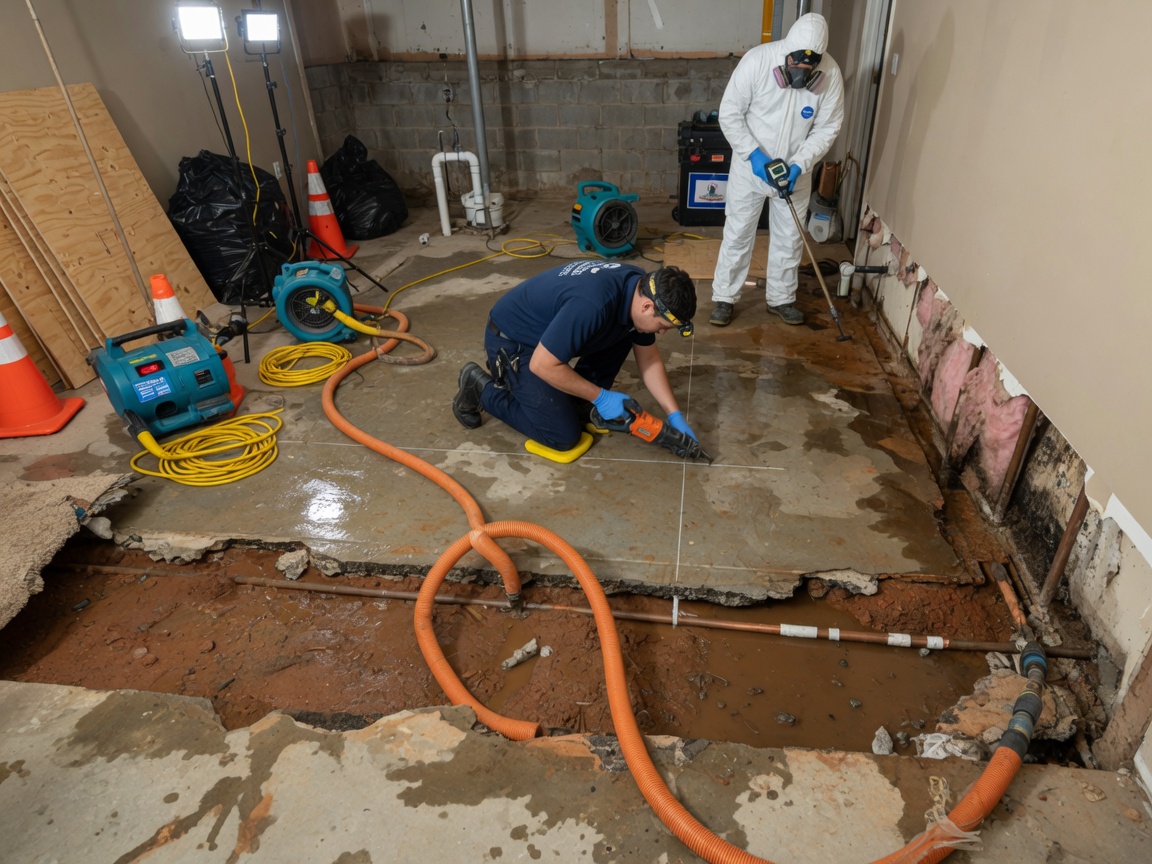
A slab leak is a supply line failure in or under the concrete floor slab, and it is the hardest residential water loss to detect because the water has nowhere visible to go. It saturates the sub slab fill, migrates laterally, and surfaces at the slab edge, at an expansion joint, or through the flooring at a low point that may be well away from the break.
The signs are indirect. An unexplained jump in the water bill with no change in usage. A section of floor that is warm underfoot, which indicates a hot water line rather than cold. The sound of running water when every fixture is off. Damp carpet or a cupping board at one edge of a room with no plumbing near it. A water meter that keeps turning after the whole house supply is closed at the fixtures.
In Fairfax County these show up mainly in slab on grade construction, additions built on slab against an older basement house, and converted garage or sunroom spaces. Copper lines in slabs fail from external corrosion where the concrete or the fill is aggressive, and from abrasion where a line was laid touching rebar or aggregate and has been moving with thermal cycling for decades.
Our part is detection support, extraction and drying. The repair route, whether that is opening the slab at the break or rerouting the line overhead and abandoning the under slab run, is a plumbing decision made with a licensed plumber. Drying a slab is slow work, because concrete releases moisture at its own pace and no amount of airflow changes that.
Technician insight
Read the bottom plate of every wall bounding the slab, not just the floor. Sub slab water migrates to the perimeter and wicks up into the wall framing from below, and a slab job that reads dry at the surface while the plates are still wet will grow mold at skirting level a couple of months later.
Slab Leak Water Damage Repair Services We Offer
✓Hot Water Slab Leak
Failures on the hot side, identified by a warm patch on the floor and a rising energy bill.
✓Slab Edge Water Surfacing
Water appearing at the perimeter and wetting baseboard and carpet away from the actual break.
✓Post Repair Slab Drying
Drying the slab and surrounding assemblies after a plumber has opened and repaired the line.
✓Meter and Thermal Diagnostics
Confirming that a suspected slab leak is one before anyone breaks concrete.
How it works
- 1
Confirm
Meter test with fixtures closed, thermal survey across the floor, and a check of the indirect signs.
- 2
Locate
Acoustic and thermal work narrowing the break location before any concrete is cut.
- 3
Extract and strip
Surfacing water removed, affected flooring and baseboard out.
- 4
Dry slowly
Slab and wall assemblies dried, with the understanding that concrete takes its time.