Fairfax Water Damage
Water Damage Restoration in Fairfax, Virginia
Emergency water removal, structural drying and mold remediation across Fairfax County and Loudoun. Crews dispatch around the clock, and the first call takes about two minutes.
- 24/7 emergency dispatch
- IICRC S500 drying standards
- Insurance documentation on every job
- Fairfax County and Loudoun County
What we do
Water Damage Restoration Services in Fairfax, VA
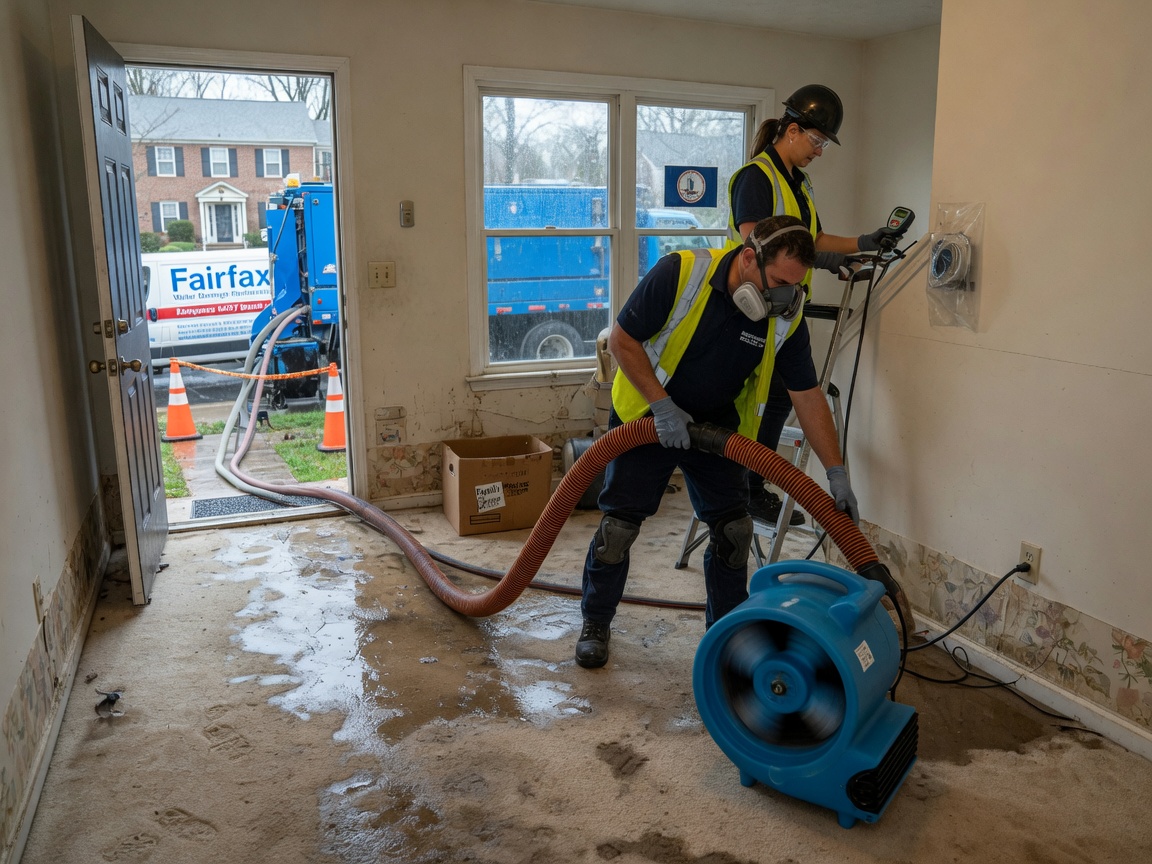
Emergency Water Extraction
Standing water removed fast, with the source classified before a single machine is placed.
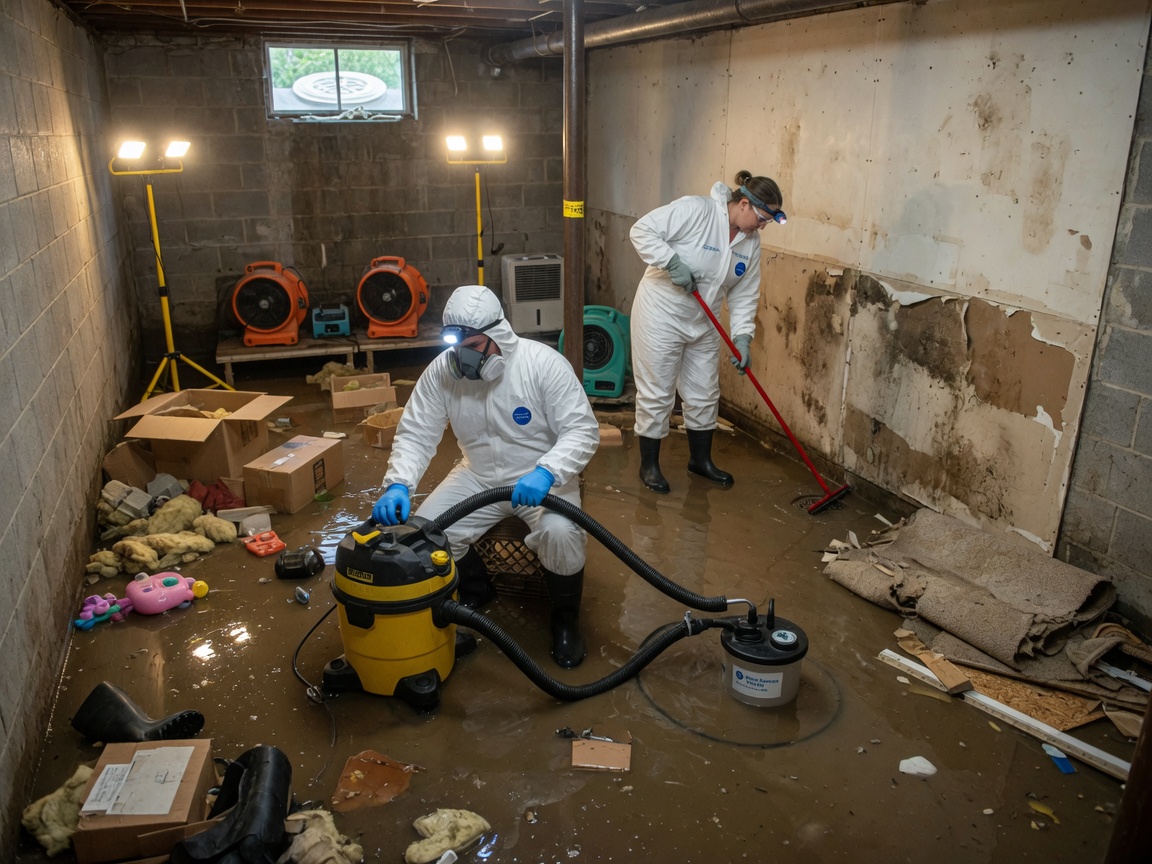
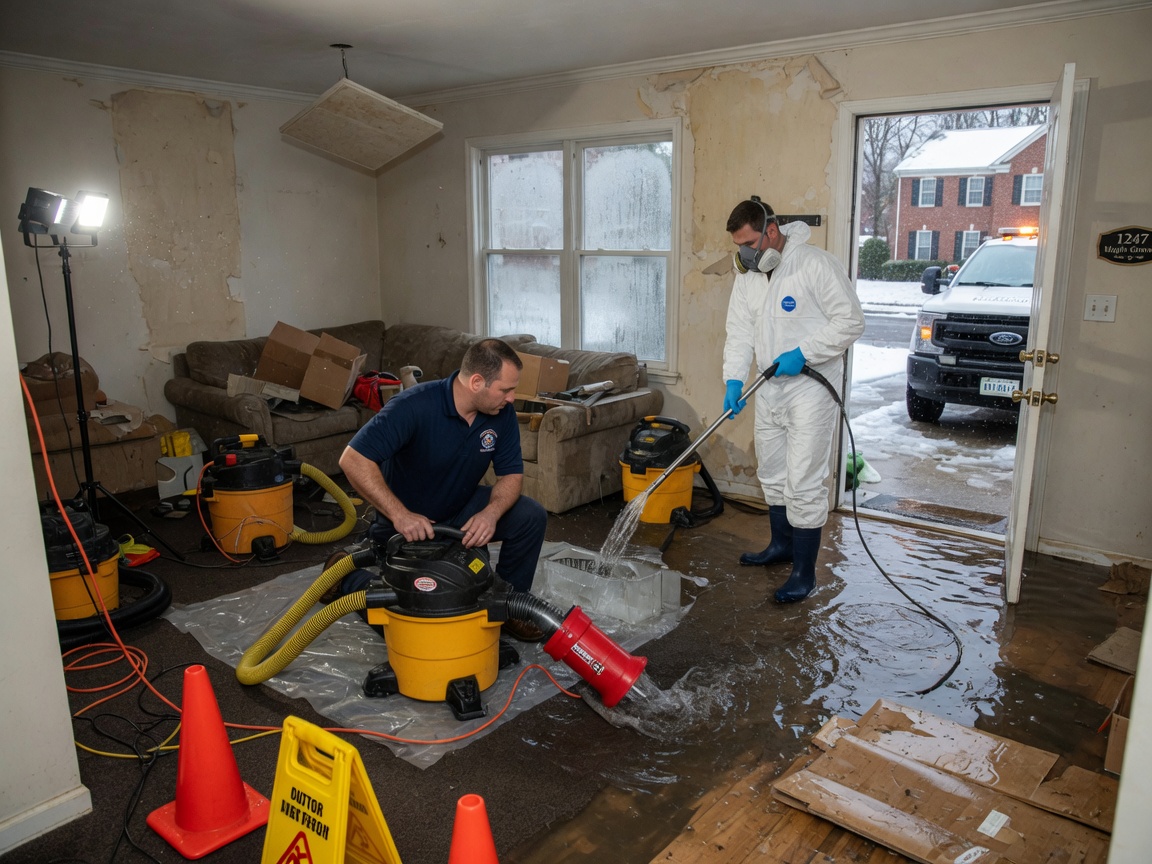
Flooded Basement Cleanup
Finished and unfinished basement flooding, from sump failure to hydrostatic seepage through the slab edge.
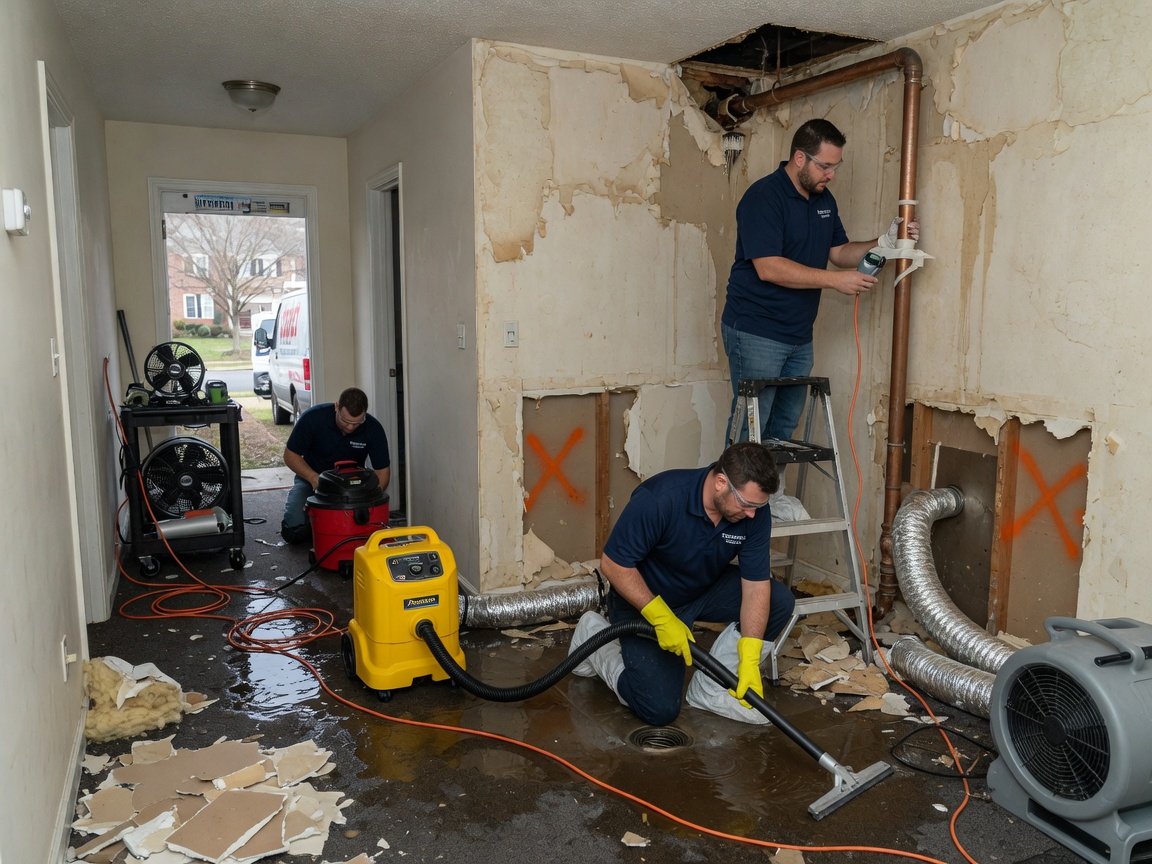
Burst Pipe Water Damage Cleanup
Supply line failures release water at full pressure, and the volume is set by how long it ran before anyone noticed.
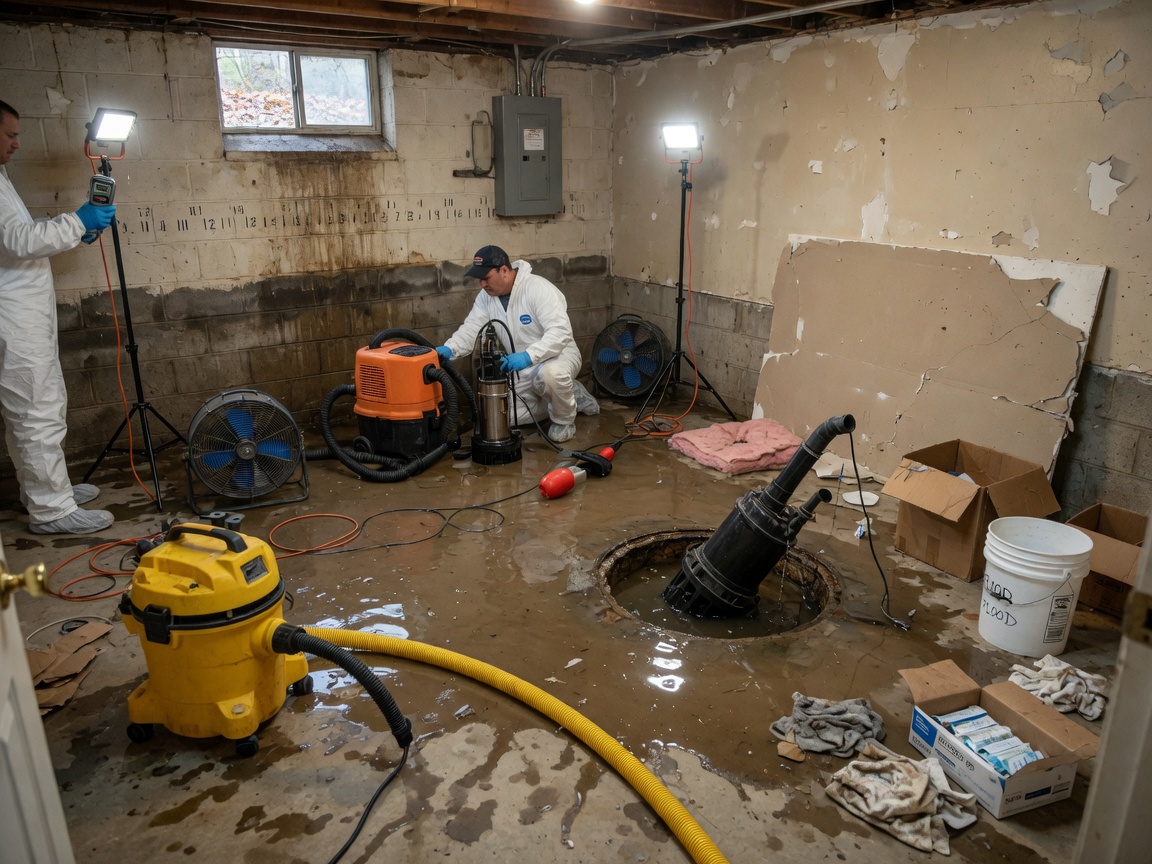
Sump Pump Failure Cleanup
The single most common cause of basement flooding in Fairfax County, and it almost always happens during a storm.
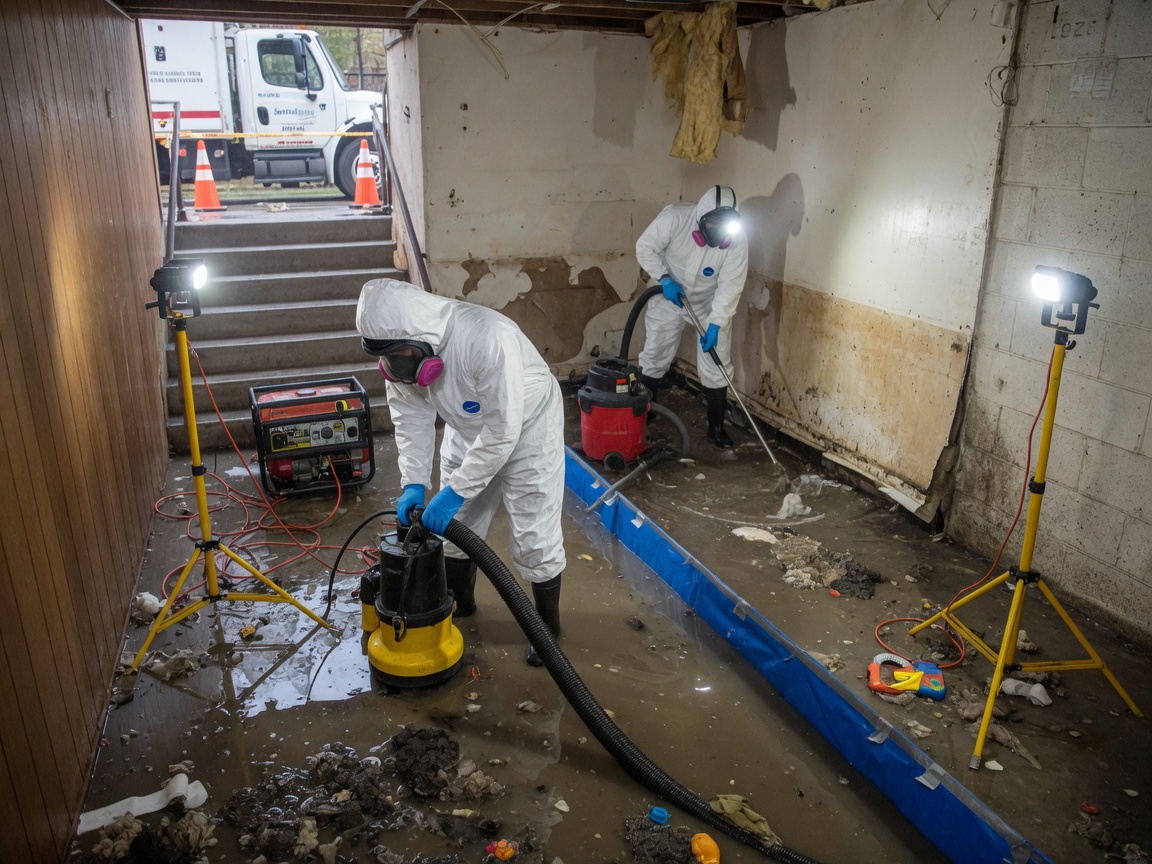
Sewage Backup Cleanup Sanitation
Category 3 water, which means containment, full removal of porous material and verified sanitation.
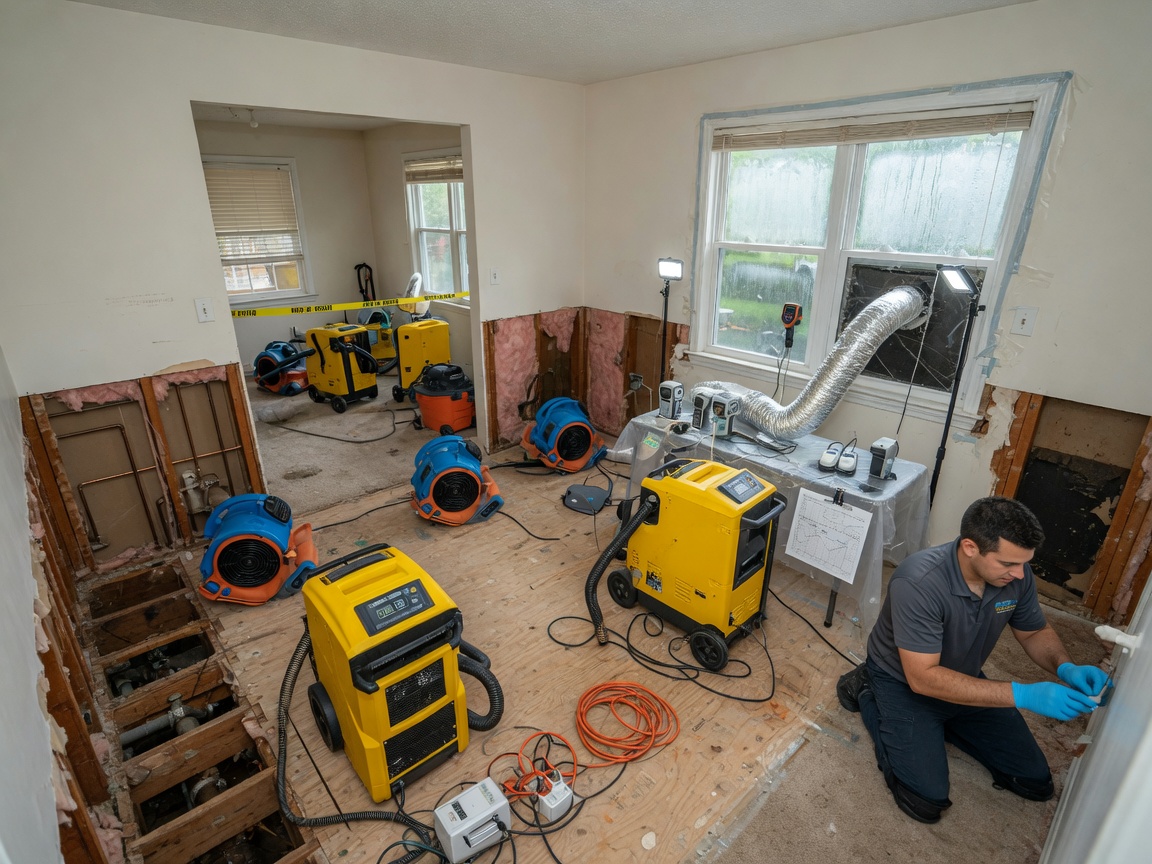
Structural Drying Dehumidification
Equipment sized by IICRC S500 to the class of loss, with daily readings against a measured dry standard.
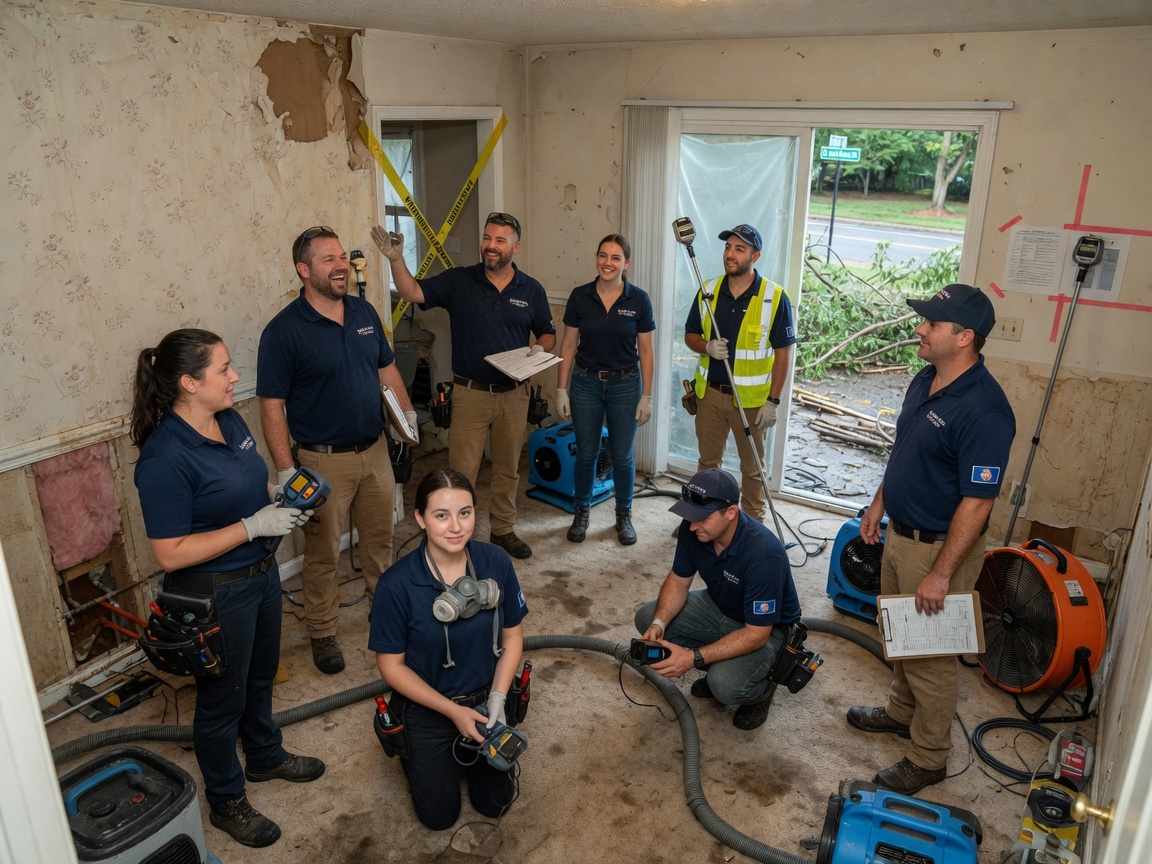
What Actually Goes Wrong in Fairfax County Homes
Water damage in Fairfax County is not random. The county's housing stock falls into four rough eras, and each one fails in its own predictable way. Pre-1960 homes in Mantua, Annandale and older Vienna still carry galvanized steel supply lines that corrode from the inside out until a pinhole becomes a split. Homes built roughly between 1978 and 1995, which covers a large share of Burke Centre, Centreville and West Springfield, were often plumbed with polybutylene, and polybutylene fails at the fittings with almost no warning. The 1990s and 2000s townhome clusters through Chantilly, Fair Oaks and Ashburn tend to fail at appliance supply lines and HVAC condensate systems instead. Newer construction is not exempt, it just fails younger and in different places.
Then there is the ground itself. Northern Virginia sits on Piedmont clay, which drains slowly. After a heavy rain the water does not soak away, it stacks up against foundation walls and pushes. That is why a Fairfax basement can flood with no burst pipe anywhere in the house, and why so many finished basements here depend on a sump pump that nobody thinks about until the night it stops.
- Emergency response 24 hours a day across Fairfax County and eastern Loudoun
- Water classified by IICRC category before any equipment is placed
- Daily moisture readings logged and handed to your adjuster
- Mold remediation under IICRC S520 containment protocols
- Direct coordination with your insurance carrier
Why Choose Us
Four things separate a drying job that holds from one that has to be redone in six weeks.
The water gets classified before anything else
Category 1 is clean supply water. Category 2 carries contamination, which covers washing machine discharge, most dishwasher failures and any water that has sat long enough to grow bacteria. Category 3 is grossly contaminated: sewage, groundwater intrusion, anything that came up through a floor drain. Category decides what gets dried and what gets removed, and it changes within hours. A crew that skips the classification step guesses at the rest.
Moisture is mapped, not eyeballed
Water travels along framing, under tile beds, behind baseboards and up drywall by capillary action. What you can see is rarely the edge of it. We use thermal imaging to find temperature anomalies, then confirm every one with a pin or pinless meter, because thermal imaging shows you where to look and a meter tells you whether it is actually wet.
Equipment is calculated, not scattered
IICRC S500 sizes dehumidification and airflow to the class of loss and the cubic footage of the affected area. A low grain refrigerant dehumidifier rated at 130 pints per day under AHAM conditions does not pull 130 pints in a 68 degree basement. We size for the real conditions and place air movers to move air across wet surfaces rather than around the room.
Dry is a number, not an opinion
A structure is dry when the affected materials read within range of an unaffected dry standard in the same building, not when the surface feels dry to a hand. Gypsum, framing and subfloor all have different targets. We log readings daily and pull equipment when the numbers say so.
28
Specialist services
17+
Areas covered
Free
Estimates & advice
How it works
From your first call to a verified dry structure
Call and stop the source
Call (571) 727-5354. Before a truck arrives we walk you through shutting off the supply at the main or the fixture, and through the electrical safety question, which matters more than most people expect when water is near outlets or a panel.
Inspect, classify and scope
On arrival the water gets a category and the loss gets a class. Thermal imaging and moisture meters map the full extent, including cavities you cannot see. You get a written scope before demolition or equipment placement begins.
Extract and remove
Truck mounted or portable extraction depending on access and volume. Carpet pad comes out, always. Category 3 losses lose porous materials entirely, because contaminated drywall and insulation cannot be cleaned back to a safe condition.
Dry and monitor
Air movers and dehumidification sized to the class of loss, with containment where it helps concentrate the drying. Readings are taken and logged every day, and equipment moves as the wet areas shrink.
Verify, then repair
Final readings confirm the structure is dry against a dry standard taken elsewhere in the building. Only then does drywall, flooring and trim go back. Rebuilding over a wet cavity is how mold jobs are created.
Service area
Water Damage Restoration Near Me — Serving Fairfax, VA
From the blog
Water Damage and Mold Guides for Fairfax, VA Homeowners
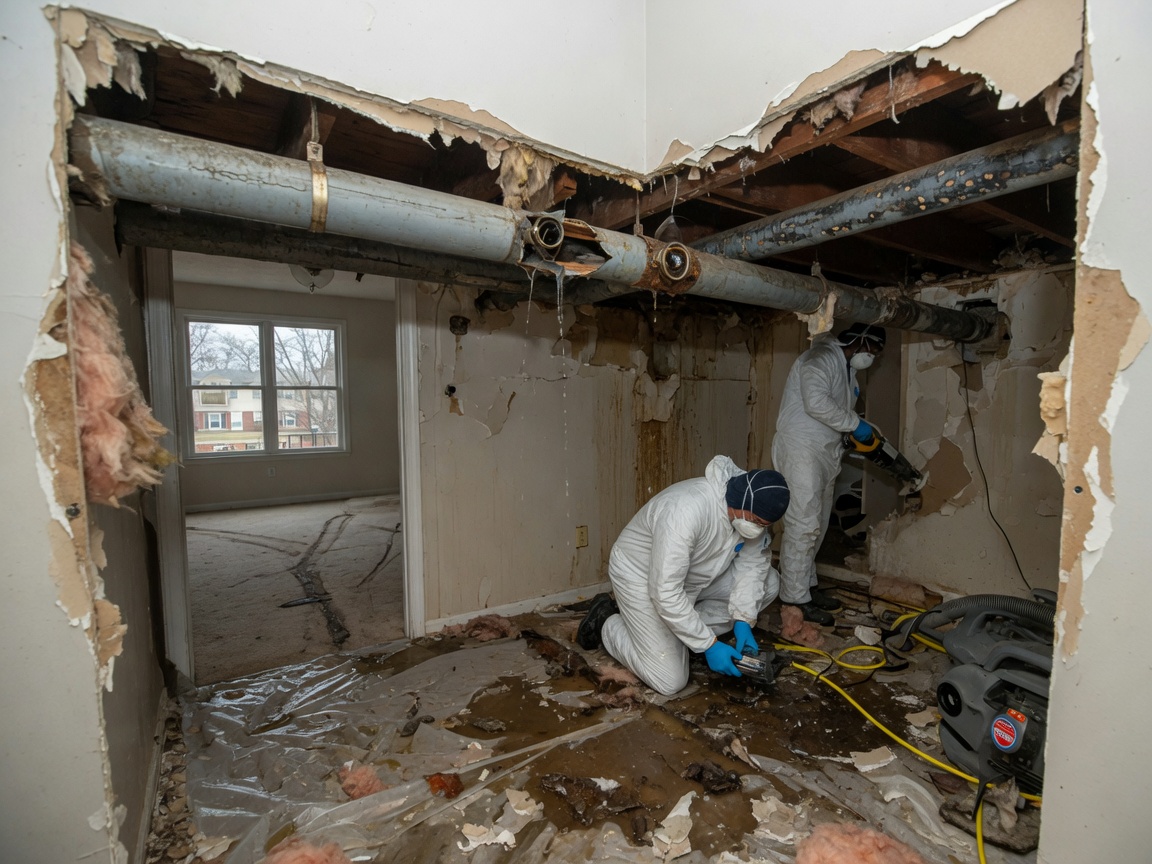
2026-09-12
Polybutylene Pipe Failure in Northern Virginia Homes
If your home was built between 1978 and 1995, check the pipe at your water heater. Polybutylene fails at the fittings with no warning.
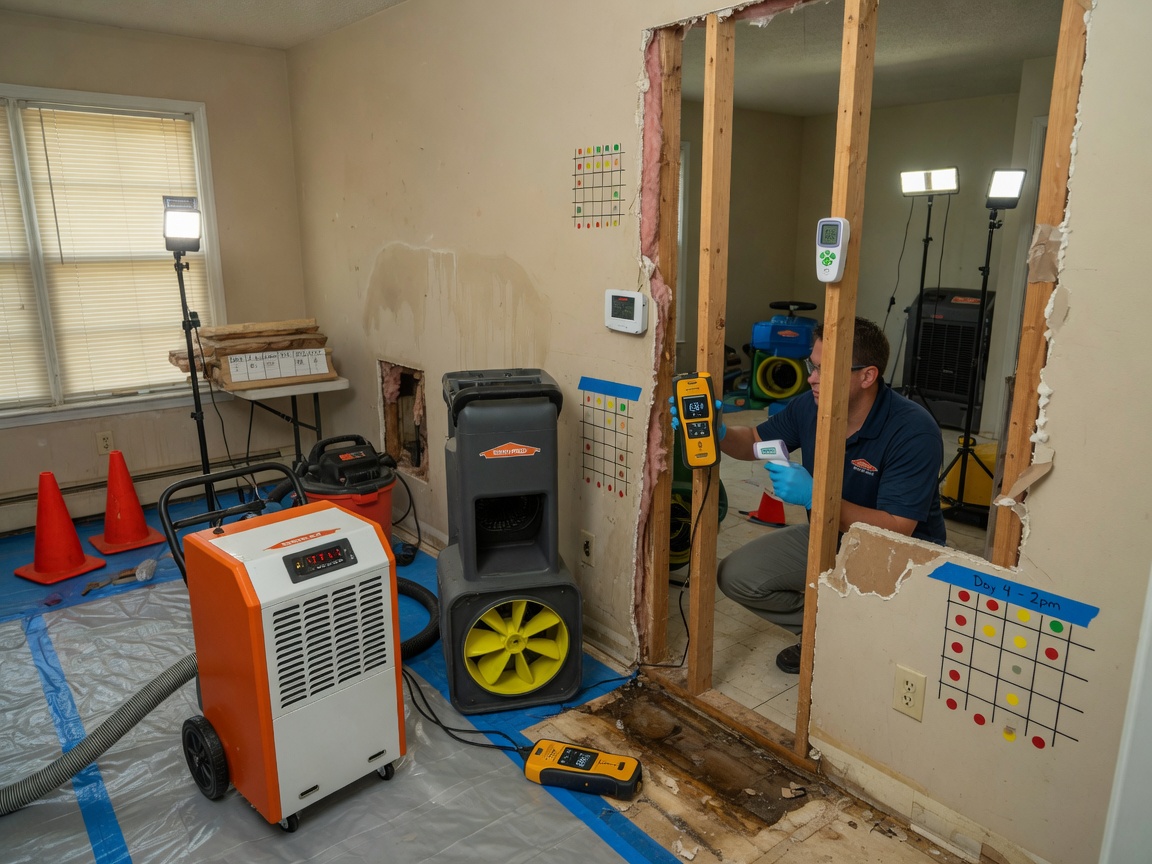
2026-09-12
How Long Structural Drying Takes and How to Know It Is Actually Dry
Three to five days is typical, but the honest answer is that dry is a measurement, not a duration.
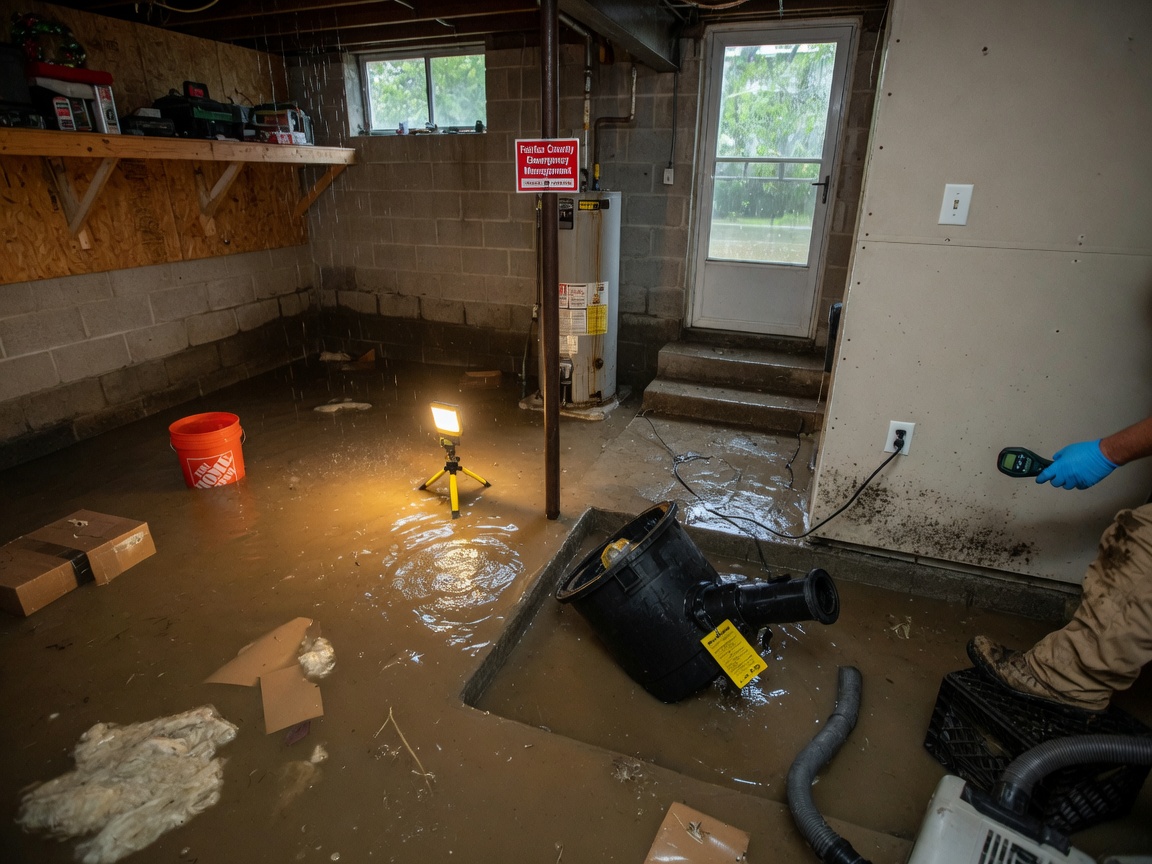
2026-09-12
Sump Pump Failure During a Northern Virginia Storm: The First 72 Hours
What happens hour by hour after a pump quits during a storm, and where the decisions that matter actually sit.
Good to know
Water Damage Restoration FAQs — Fairfax, VA
Call any hour. If it is an active leak we will talk you through the shutoff before a truck moves.
(571) 727-5354