2026-09-12 ·
Sump Pump Failure During a Northern Virginia Storm: The First 72 Hours
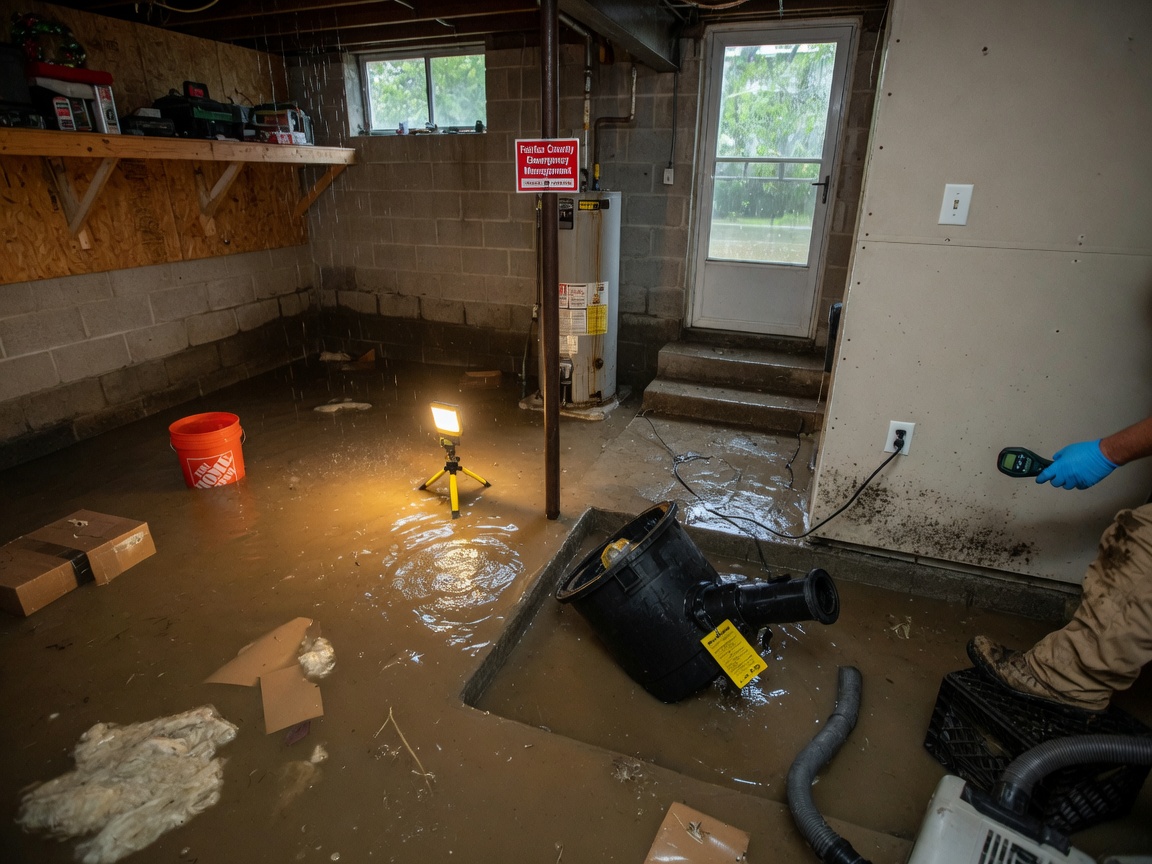
When a sump pump fails during a sustained Northern Virginia rain, the useful window is the first 24 hours for extraction and the first 48 for getting the space into a controlled drying condition. Miss both and a basement flood becomes a mold remediation. The three days that follow are largely determined by decisions made in the first few hours.
Hour zero to two. Safety comes before water. If the water is anywhere near outlets, a submerged appliance or the electrical panel, and you cannot reach the breaker panel from a dry position, stay out and call an electrician or the utility. Once it is safe, lift what you can, get cardboard and paper off the floor because both are unrecoverable once wet, and put foil or plastic under furniture legs standing on wet carpet. Photograph everything before it moves, since the claim depends on the record and the record disappears as soon as cleanup starts.
Hour two to twelve. Extraction. Every gallon pulled out mechanically is a gallon that does not have to be evaporated, and evaporation is the slow part. Carpet pad comes out, and it will be heavier than anyone expects. If the water came up through a floor drain rather than in from the ground, the category changes and so does the plan, because a sewer surcharge is Category 3 and porous materials are removed rather than dried.
Hour twelve to forty eight. Drying gets set up, and in a basement that means closed drying rather than open windows. Below grade air is cool, regional humidity in most of the year is high, and bringing outside air in raises the vapour pressure the dehumidifier has to fight. The space gets sealed, low grain refrigerant dehumidification runs, and air movers are placed across wet surfaces. This is also the window in which the mold clock is running, so the aim is to have the space in controlled conditions before it closes.
Day two to three. Readings are taken daily and the drying is adjusted. The subfloor and the bottom plate of any framed wall are the slow parts and the ones that decide when equipment comes out. This is also when the cause investigation should happen, and it matters: the pump, the float, the check valve, the discharge line and the grading are five different faults with five different fixes, and the discharge line is the culprit far more often than people expect. A discharge terminating close to the foundation on clay soil returns its own water to the basin, which burns out pumps and floods basements repeatedly. That diagnosis is part of every sump pump failure cleanup we run, and the wider drainage picture is covered in why Fairfax County basements flood during heavy rain.
One coverage note that catches people. Sump pump failure is generally excluded from standard homeowners policies and is covered by a water backup and sump overflow endorsement, which is inexpensive and which many people either have and forget, or assume they have and do not. Check the declarations page rather than the policy summary, and if you have a finished basement and no endorsement, that is worth a call to your agent this week rather than after the next storm.