2026-09-08T18:44:22.016Z ·
How Long Does It Take for Mold to Grow After Water Damage?
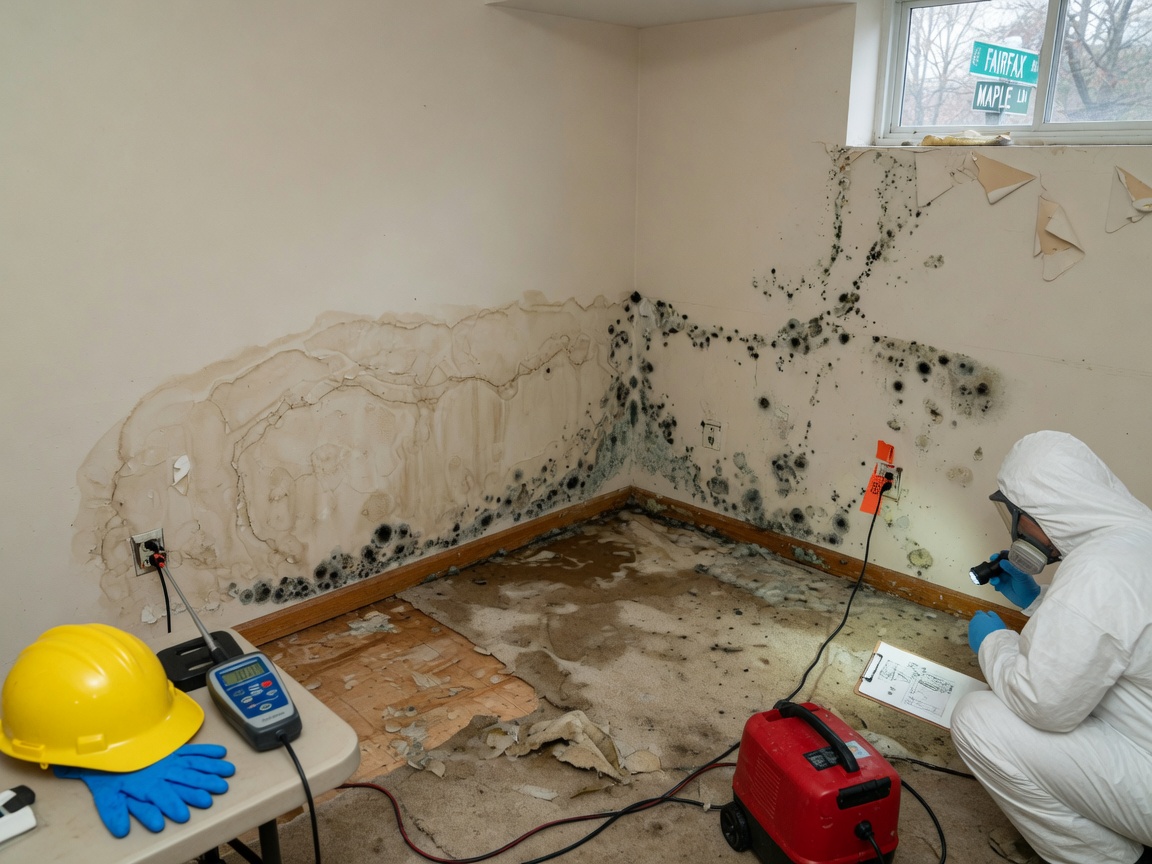
Mold can begin growing on wet cellulose materials within 24 to 48 hours of a water event. Cellulose means drywall paper, cardboard, wood, carpet backing and household dust, and all of them are already carrying mold spores before any water arrives. Water is the only missing ingredient. Once it is present, growth starts in that window under normal indoor conditions, and the clock starts when the material gets wet, not when you notice it.
That 24 to 48 hour figure is a working range rather than a law. Three things move it. Temperature: growth accelerates in warm conditions and slows considerably below about 60 degrees Fahrenheit. Humidity: the more moisture the surrounding air holds, the slower the material can release its own moisture, so it stays wet longer. And the material itself: paper faced drywall and carpet pad support growth far more readily than solid timber or concrete.
Northern Virginia sits at the unhelpful end of that range for much of the year. From late May through September the outdoor dew point here regularly stays high enough that opening windows to dry a room actively adds moisture rather than removing it. A basement flood in July and the same flood in February are not the same job, and the July version has a materially shorter safe window.
The practical consequence is that the first day matters more than the following week. Extraction on day one removes water mechanically, which is fast. Waiting for it to evaporate is slow, and evaporation into a closed humid space just relocates the water into the air and then back into other materials. If you take one thing from this: get the standing water out, then get dehumidification running, and do both on the first day.
There is a second, less obvious point about the window. Mold does not need standing water. Sustained high humidity against a cool surface is enough, which is why basements grow mold with no leak at all. If relative humidity in a below grade space sits high through a Fairfax summer, the growth arrives eventually regardless of whether anything ever flooded. That is the mechanism behind most of the basement mold we remediate, and it is also why crawl space mold returns after remediation unless the humidity is dealt with.
What this means when you are looking at a wet room right now: the visible water is the urgent part but not the whole problem. Water in a wall cavity or under flooring is not evaporating anywhere useful and it is sitting against exactly the materials mold prefers. That is the part that turns a two day drying job into a mold remediation job three weeks later. If the water came from below grade rather than from a pipe, our guide on why Fairfax County basements flood during heavy rain explains what you are likely dealing with.