2026-09-04T18:44:22.016Z ·
Does Homeowners Insurance Cover Water Damage in Virginia?
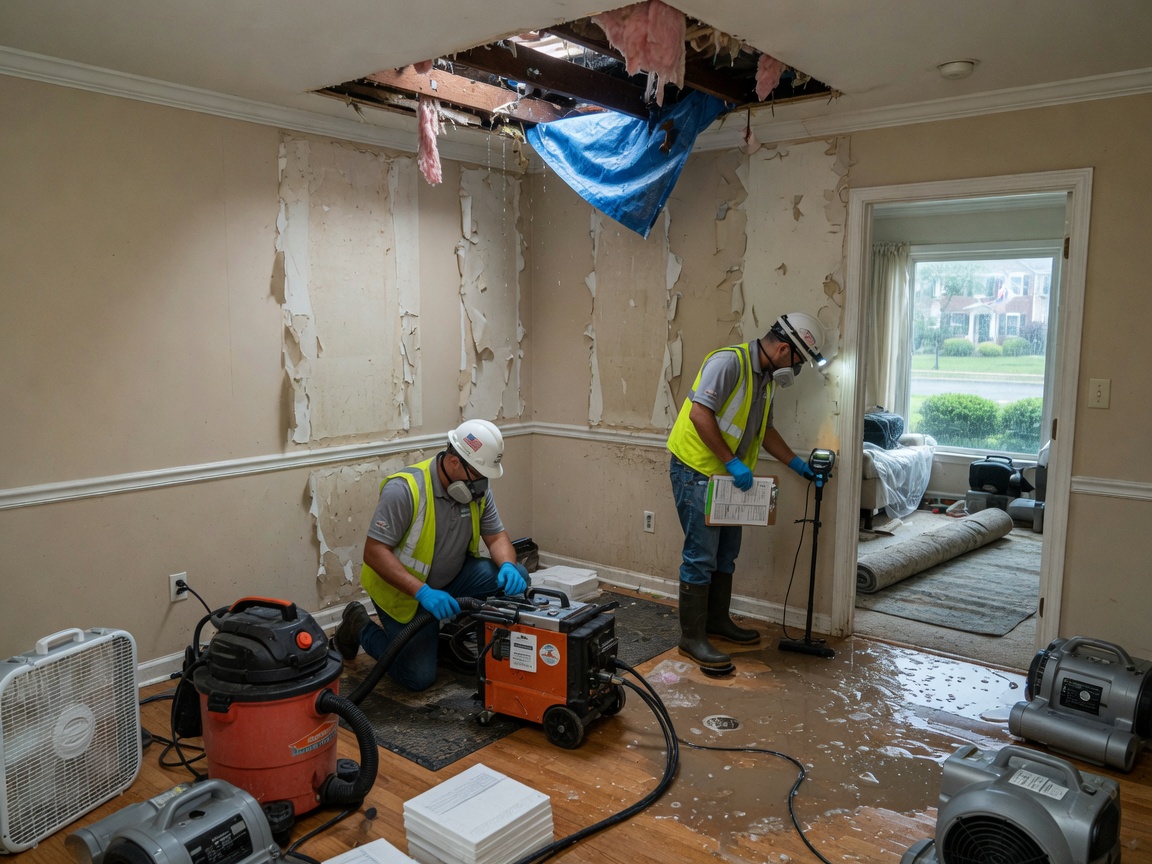
Most Virginia homeowners policies cover water damage that is sudden and accidental, and exclude water damage that is gradual, that comes from outside at ground level, or that backs up through a drain unless you bought a specific endorsement. That single distinction explains the majority of coverage disputes we see in Fairfax County, and it is worth understanding before you need it.
Sudden and accidental is the covered category. A supply line that bursts, a water heater that ruptures, a washing machine hose that fails, a pipe that freezes and splits. The event happened at a point in time, it was not expected, and it was not the result of neglected maintenance. These claims are usually straightforward when the loss is documented properly.
Gradual is the excluded one, and it is where people get caught. A shower pan that has been leaking slowly into the subfloor for two years, a roof that has been failing for several seasons, a supply fitting that has been weeping behind a cabinet. Carriers treat these as maintenance rather than accident. The difficulty is that a gradual leak is often discovered suddenly, and the argument then turns on evidence about how long it had been happening. Staining patterns, mold development and material degradation all tell that story, which is why proper documentation cuts both ways and is worth having either way. Where the source is genuinely unknown, leak detection establishes it before the argument starts.
Surface flooding is excluded from standard policies entirely. Water that arrives at your property across the ground, from a swollen creek, from overwhelmed drainage or from saturated soil, requires separate flood insurance and is handled as flood damage cleanup rather than a plumbing loss. In Fairfax County this matters for properties near Accotink Creek, Difficult Run, Pohick Creek and Bull Run, and the FEMA flood maps are the reference. If you have taken groundwater more than once and do not carry flood cover, that is worth a conversation with your agent rather than with a restoration contractor. Our comparison of water backup coverage versus flood insurance sets out which product covers what.
Sewer and drain backup is its own category and it is usually an endorsement. It is inexpensive, many people have it without remembering, and many people assume they have it and do not. Given that a basement floor drain backup is one of the most common serious losses in Springfield, Annandale and the older parts of the county, checking your declarations page for it is a five minute job worth doing today rather than after.
Whatever the category, documentation is what moves a claim. Photograph everything before anything is moved or removed. Keep damaged items until the adjuster has seen them or has agreed in writing that photographs suffice. Get daily moisture readings from whoever does the drying, and keep the log. A claim that stalls almost always stalls because the carrier cannot verify the scope, and that is a fixable problem if the record exists from day one. A documented water damage inspection produces exactly that record, and contents pack out covers the itemised inventory side.
One practical note on the mitigation duty. Virginia policies, like most, require you to take reasonable steps to prevent further damage after a loss. That means shutting the water off, and it means getting mitigation started rather than waiting for an adjuster to visit. Delaying drying because you are waiting for approval can itself become a coverage problem, and with the mold window running at 24 to 48 hours, the delay costs more than the argument saves.