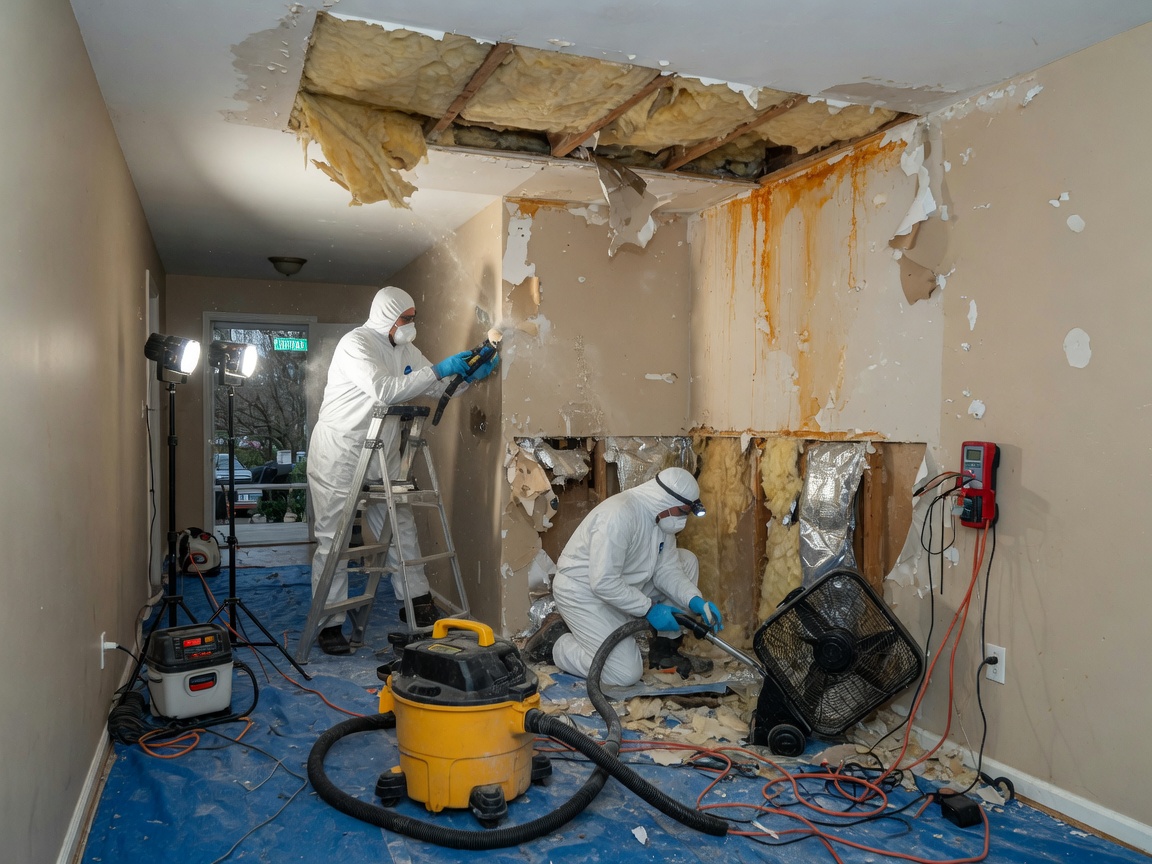
Drywall is gypsum between two layers of paper, and the paper is what decides everything. Gypsum itself tolerates water reasonably well and can often be dried. The paper facing is cellulose, it wicks water upward against gravity, and it is the preferred food source for mold in a building. That combination is why a board wet at the bottom is compromised well above the visible waterline.
The salvage decision comes down to three things. How high the water wicked, which is measured rather than guessed and is routinely a foot or more above the visible mark. What category the water was, because contaminated water in gypsum is not dried, it is removed. And whether there is insulation in the cavity behind, because a wet batt holds water against the back of the board indefinitely and will not dry through a finished wall.
Where a cut is needed, the standard is a flood cut at 12 or 24 inches rather than at the waterline, because cutting at a stud line height makes the reinstatement clean and because cutting at the tide line leaves wet material in the wall. On a Category 3 loss the cut goes above the highest reading, not the highest stain. Sometimes the better answer is no cut at all, with cavity drying through small holes at the bottom plate, which is faster and cheaper where the water category allows it.
Reinstatement is where the job is judged. New board, tape and three coats, then a texture match to the surrounding wall, then priming and paint. Most Fairfax County walls are smooth or lightly textured and match well. What gives a repair away is nearly always the paint rather than the drywall, so a full wall repaint corner to corner beats a patch blend on anything visible.
Technician insight
Read the bottom plate through the cut before closing the wall. The framing is the part that has to be dry, and a stud bay can read acceptable at the drywall while the plate underneath is still well above standard, particularly on a slab where the plate sits directly on concrete.
Drywall Water Damage Repair Services We Offer
✓Flood Cut and Reinstatement
Removal at a clean height, cavity drying, and rebuilding the wall properly.
✓Cavity Drying Without Removal
Directed airflow through small access points, avoiding demolition where the water was clean.
✓Ceiling Drywall Replacement
Sagging or failed ceiling board, with texture matched to the existing surface.
✓Texture Matching and Finishing
Matching smooth, orange peel or knockdown finishes so the repair is not visible.
How it works
- 1
Measure the wick
Readings up the board to find the real top of the wet zone, which is above the stain.
- 2
Decide dry or cut
Category and insulation determine whether the board is dried in place or removed.
- 3
Dry the cavity
Insulation out where wet, framing dried to a dry standard before anything closes up.
- 4
Rebuild and finish
Board, tape, texture match, prime and paint.