2026-08-23T18:44:22.016Z ·
How Much Does Water Damage Restoration Cost in Northern Virginia?
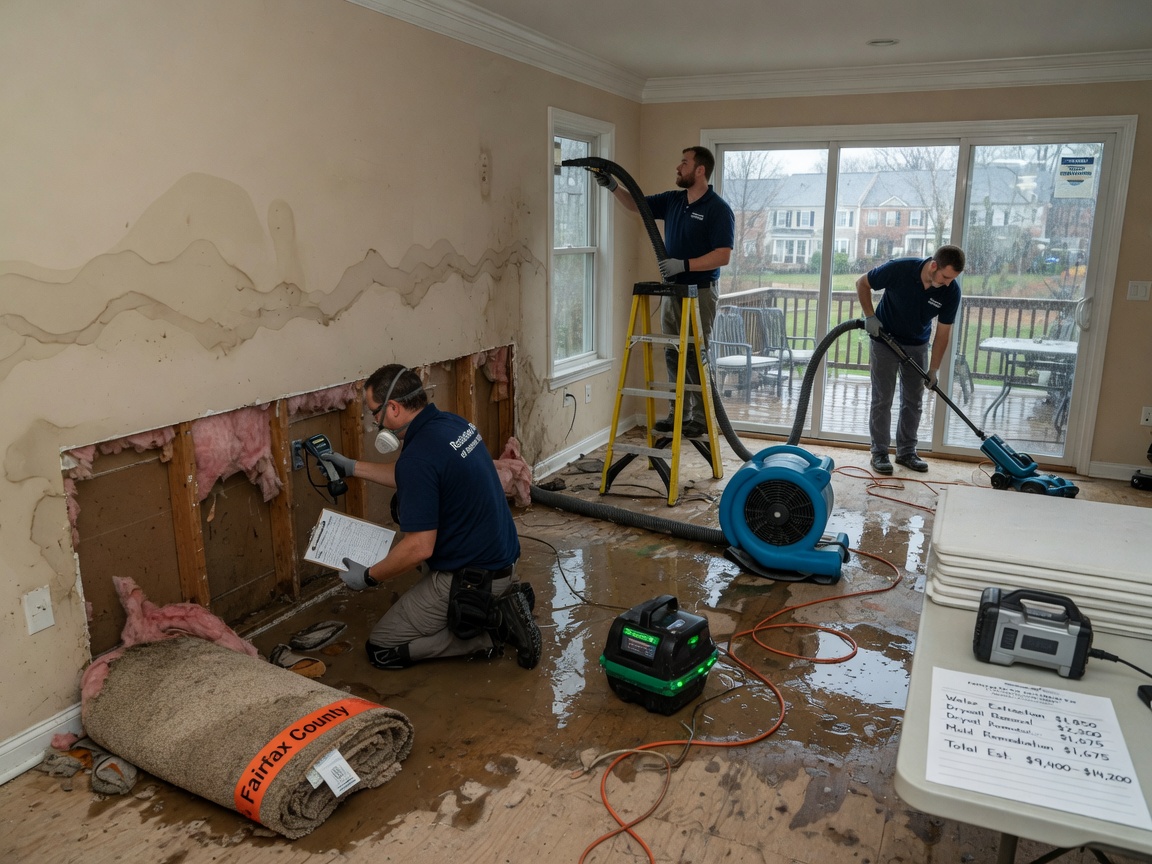
Water damage restoration cost is set by four variables: the category of the water, the square footage and number of materials affected, how many days of equipment the structure needs, and whether repair follows the mitigation. Anyone who gives you a firm number before taking a moisture reading is guessing, and the guess is usually low.
Category is the biggest single multiplier. Clean supply water on a Category 1 loss lets most materials be dried in place, which is the cheapest outcome available. Category 2 means some porous material comes out. Category 3, meaning sewage or groundwater, means all porous material in the affected zone is removed and the remaining structure is sanitised before drying even begins. The same square footage can differ by a large factor across those three, and the water does not stay in its original category as time passes.
Affected area is not the same as the room you can see. Water travels along framing, under tile beds and up drywall, and the drying scope covers the mapped wet envelope rather than the visible damage. This is the number that most often surprises people, and it is also the reason a documented moisture map is worth having before you compare quotes. Two contractors quoting different prices are frequently quoting different areas, not different rates.
Drying days drive the equipment cost. Most residential losses run three to five days. Dense materials run longer, sometimes considerably, because hardwood, plaster and concrete release moisture slowly no matter how much equipment is pointed at them. Equipment cost is generally counted per unit per day, so a scope that names the equipment count and the expected duration is telling you most of what you need in order to compare. Our guide on how long structural drying takes explains what sets that duration.
Then there is the mitigation versus repair split, which is where the largest cost variation lives. Mitigation is extraction, removal and drying, and it is the emergency phase. Repair is putting the building back: drywall, insulation, flooring, trim, cabinetry and paint. Repair frequently costs more than mitigation, particularly on a finished basement or where flooring has to be matched. Some quotes cover only the first phase, so check which one you are looking at before comparing two numbers.
What a written scope should contain, and what you should ask for from anyone including us: the affected areas with moisture readings by material, the water category and why it was assigned, what is being dried versus removed and the reason, the equipment count and expected drying duration, and whether repair is included or separate. If a proposal is a single figure with no readings behind it, you have no way to evaluate it and neither does your adjuster. A documented water damage inspection is what produces that scope.
One note specific to insurance work. Most carriers price restoration work against a standard estimating platform, so on a covered claim the line item rates are less variable than people expect. The variation is in the scope, meaning what a contractor says is affected. That is why documentation is worth more than negotiation, and why the moisture map is the document that matters most in the file. What your policy will actually pay for is a separate question, covered in does homeowners insurance cover water damage in Virginia.